


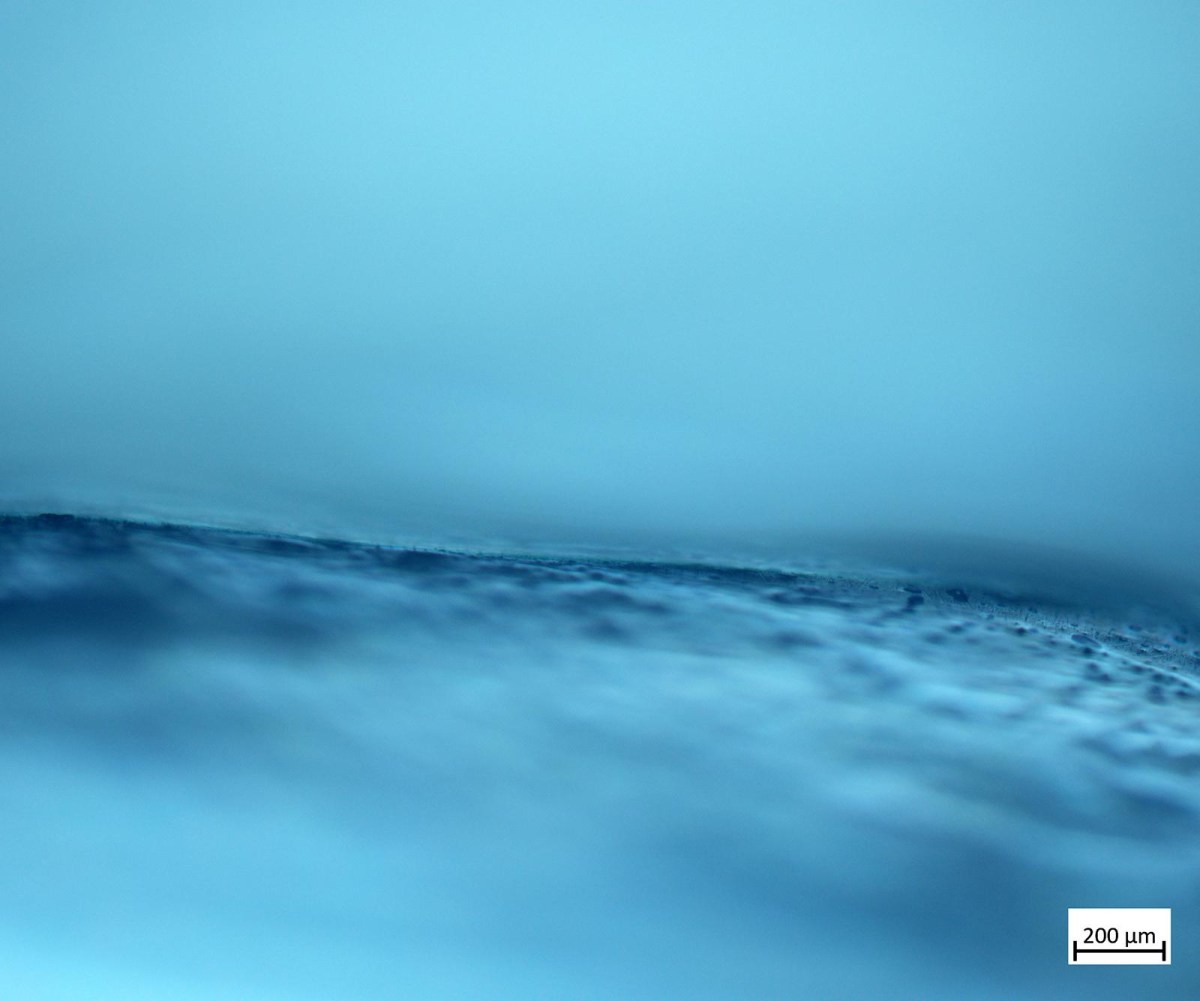
Seawater and brackish water are gaining attention as alternative water resources for hydrogen production. In the SeaEly collaborative project, the Fraunhofer Institute for Wind Energy Systems IWES and the Fraunhofer Institute for Manufacturing Technology and Applied Materials Research IFAM investigated the suitability of untreated saline water for electrolysis and determined what testingand testing infrastructure is required for this. The goal is to reduce the effort required for water treatment and thereby facilitate coastal and offshore applications in particular.
If electricity from wind turbines is used directly for electrolysis, hydrogen can be produced on-site and then stored, transported, or reused as a chemical feedstock. SeaEly ran from October 2022 to March 2026 as part of the “Hydrogen Republic of Germany” ideas competition. In addition to Fraunhofer IWES and Fraunhofer IFAM, participants included the Technical University of Berlin, Whitecell Eisenhuth, and the Institute for Maritime Transport Economics and Logistics.
Test benches for saline electrolytes
The project focused on determining the maximum degree of purity at which seawater can be used directly in electrolysis. “The idea was to determine the maximum degree of purity at which seawater can be used directly in electrolysis without overloading the equipment,” says Dr. Nadine Menzel, group leader of Electrochemistry and Analytics at the Hydrogen Lab Leuna of Fraunhofer IWES.
At Fraunhofer IFAM, new membranes for the electrolysis of untreated seawater were developed for this purpose and tested on a modular electrochemical test bench. The setup allows materials to be tested under various operating conditions and then specifically analyzed for deposits, surface changes, and corrosion and aging processes. In addition, techniques such as scanning electron microscopy, EDX, XPS, and TOF-SIMS are used. Andreas Brinkmann of Fraunhofer IFAM describes the challenge as follows: “The more impure our electrolyte becomes, the more pressing the question becomes: How long will our individual components last?”
Focus on Membranes and Long-Term Behavior
The membrane plays a central role in water electrolysis. It separates the reaction chambers for hydrogen and oxygen while simultaneously enabling the necessary ion transport. In seawater in particular, chlorides and other constituents complicate operation because they can trigger side reactions, promote deposits, or accelerate corrosion and aging.
At the same time, a larger, multi-purpose test bench was developed at Fraunhofer IWES. There, different electrolysis technologies and newly developed components can be compared using brackish or saltwater, including PEM, alkaline, and AEM electrolysis. Promising materials can thus be scaled up from small test cells to larger assemblies in order to evaluate not only material behavior but also the interaction between multiple cells and other system components.
The project thus laid the groundwork for further long-term studies. In the future, the focus will primarily be on aging, corrosion, deposits, and the influence of electrolyte composition on the service life of the components. The test benches developed are already being used beyond the scope of SeaEly and are also available for industrial projects and external applications.