

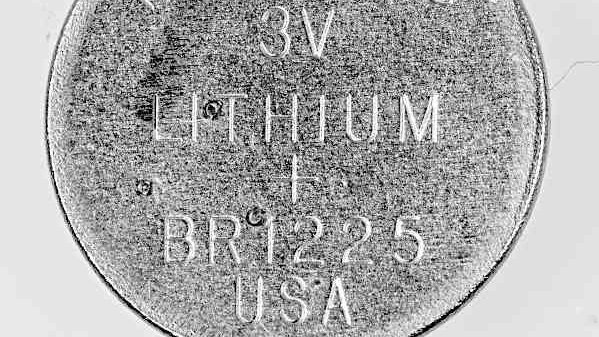
One promising approach involves lithium-metal anodes, in which lithium itself serves as the active anode material and, due to its high specific capacity, enables battery cells with higher energy density.
To harness the potential of lithium-metal anodes for longer-lasting battery cells, the new research project “Limac – Amorphous Carbon Interlayers for Reliable Lithium-Metal Battery Cells” focuses on thin, amorphous carbon interlayers. The central question is whether these layers can stabilize the interface between the lithium-metal anode and the (solid) electrolyte, thereby contributing to more reliable and longer-lasting battery cells.
Depositing Amorphous Carbon Layers via Laser-Arc PVD
To this end, the first step involves developing thin, amorphous carbon layers and depositing them onto copper current collectors using a laser-arc PVD process. The coated materials will then be tested in battery cells and compared with reference cells. The goal is to determine which properties of the interlayers are crucial for achieving the most stable interface possible within the battery cell.
In addition to technical performance, the project also considers environmental impact and the scalability of the technology to larger cell formats. On the one hand, a life cycle assessment (LCA) will be used to examine material and energy flows as well as the environmental impacts of the approach; on the other hand, a concept for transferring the technology to larger pouch cells will be developed simultaneously.
From the laboratory scale to larger battery cells
In this way, the project combines material development and cell research with environmental assessment and initial considerations for future scaling. The goal is to evaluate the potential of amorphous carbon interlayers for more reliable lithium-metal batteries and to lay the groundwork for further development toward larger cell formats.
In the long term, more powerful and longer-lasting lithium-metal batteries could help reduce the weight of battery systems while enabling high energy densities. This could benefit applications where weight, performance, and range play a key role—from electric vehicles to aerospace and stationary energy storage systems.
The project is scheduled to run from September 2026 to August 2028. It is funded as part of the internal Fraunhofer program PACT (Program for Affiliate Cooperation and Knowledge Transfer).