
Powder coating sensitive substrates
Coating demanding substrates with highly reactive low-temperature powders
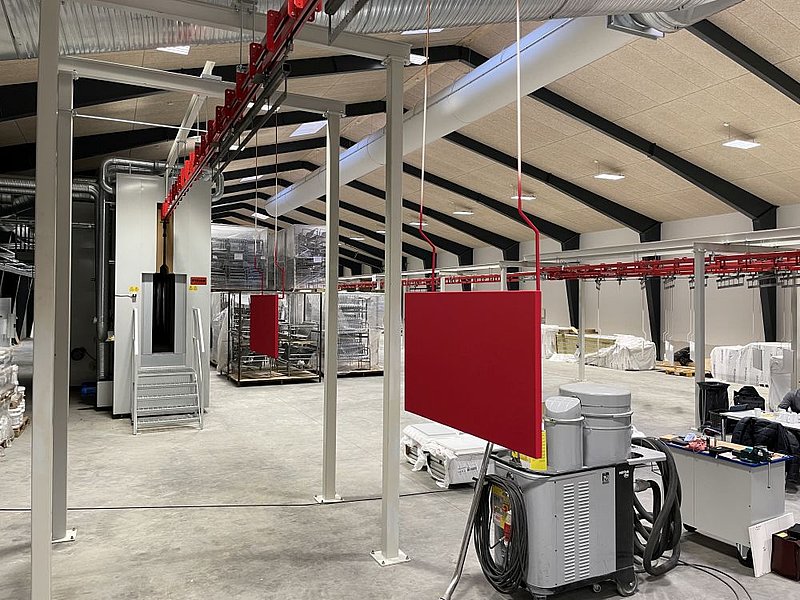
Wet painting is becoming increasingly difficult due to environmental regulations and other directives. A contract coater was therefore looking for a powder coating that could replace wet painting.
The Danish contract coater Brandt has been active in wet painting and powder coating for a long time. The company covers the entire technology spectrum from manual coating to highly automated painting systems for wet paint and powder coating. Customers come from the wood and furniture industries as well as the metal, construction and plastics industries. With around 100 employees at the Varde site, Brandt is now one of the leading contract coaters in Denmark. Currently, the demand for coating sensitive substrates is constantly increasing. These include organic and mineral materials - wood and plastic materials - as well as fiber cement panels and a variety of hybrid material composites. They are processed, for example, into MDF kitchen fronts or window frames. Many of these materials have no or very low electrical conductivity and are sometimes very temperature-sensitive.
In view of increasingly restrictive guidelines for wet painting, Brandt was looking for a sustainable powder coating solution that could also be applied to sensitive substrates. Traditionally, these materials are often wet coated. Powder coating not only offers a smaller environmental footprint, it also excels in saving resources. Another advantage is that the surfaces are coated seamlessly, are scratch-resistant and extremely durable.
After a careful analysis with the corresponding application trials, Wagner's specialists developed a flexible plant concept together with TRIAB - a Scandinavian system house supplier of powder ovens - and selected powder coating manufacturers. This was installed at the contract coater at the end of 2021.
Powder coating that is gentle on materials
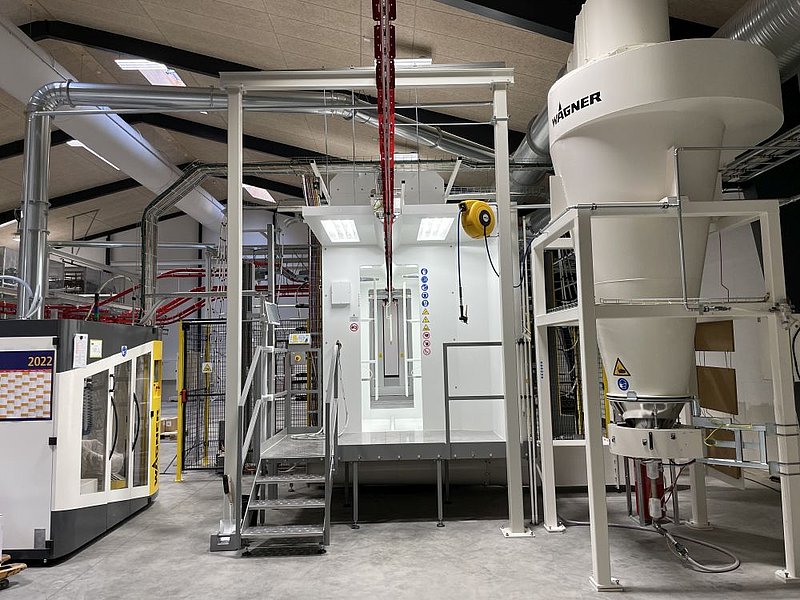
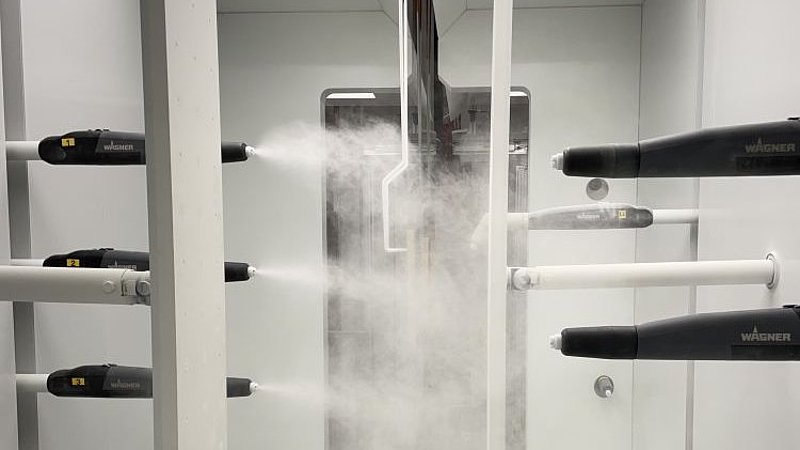
With the new electrostatic M-Line powder coating system, the Danish coating specialist is one of the first companies in the Scandinavian region to offer powder coating for non-metallic substrates. Non-conductive, temperature-sensitive materials such as plastics and even inhomogeneous natural materials such as wood can now be powder coated with high efficiency in a material-friendly manner. To achieve this, the coating system can process highly reactive low-temperature powders and UV powders in addition to conventional metal powders.
The coordinated components of the M-Line system ensure that different powder coatings can be applied with a high degree of application efficiency, even on non-conductive materials. A core element is the exhaust pipes arranged on both sides along the coating booth, which minimize the air flow in the coating zone. Field controllers improve the grounding of non-conductive or only slightly conductive workpieces, optimize the coating thickness distribution and prevent the so-called picture frame effect. The special geometry of the piping and the monocyclone reduces the pressure loss in the system and the risk for powder deposits. This so-called Energy Efficiency Package (EEP) from Wagner also reduces the friction of the powder during recovery, which generates less heat energy. This enables gentle recirculation of the highly reactive low-temperature powder. To control the complete plant technology, including automatic guns and motion units, Brandt uses the SuperCenter EVO powder center with Twin Sonic Sieve. Powder conveying and color change processes are thus automated and carried out very reliably.
Lower energy and material consumption
The preheating and melting processes take place in infrared ovens. Curing is then carried out using either electric infrared (IR) or ultraviolet (UV) technology in the TRIAB Speedoven UV. A precise interplay of infrared radiation, convection air and ultraviolet radiation enables extremely temperature-sensitive substrates to be fully cured at below 120°C and within two to three minutes. The contract coater was able to significantly improve its environmental balance sheet with the new powder system, because with the Energy Efficiency Package, the coating system requires up to 40 percent less energy than comparable systems. A smaller fan motor is sufficient to generate the same extraction volume in the coating booth. In addition, unlike wet painting, no solvents are produced. Since the overspray powder is recycled, a large amount of material is also saved. Last but not least, the company's robust 1-layer powder technology, which requires no intermediate sanding, also significantly reduces manual processes. Compared with wet painting, the throughput time per workpiece can be significantly reduced: About one minute of preheating, about one minute of powder coating, about five minutes of curing in the oven and about 20 minutes of cooling time - in total, the throughput time for a circulating layer is only 30 minutes.
The system opens up completely new possibilities for the Danish coating specialist: Thanks to the very flexible overall concept, the contract coater can now successfully process a wide range of non-metallic objects and materials and thus respond more flexibly to customer requirements.
J. Wagner GmbH www.wagner-group.com