

Stay healthy while painting
Gefahren und Schutzmaßnahmen am Beispiel Isocyanat
The instructions in the safety data sheets are often neglected or even ignored. Where skin and eye protection are still implemented comparatively consistently, adequate protection of the respiratory tract is usually left out. The effects this can have are shown by the example of isocyanate.
Why do you actually need safety data sheets? Short answer: In order not to suffer any harm when handling hazardous substances or to find a clear solution in case of problems when handling these substances. In practice, these instructions are conspicuously often neglected or even ignored in connection with the processing of coatings and solvents. Where skin and eye protection are still implemented comparatively consistently, adequate protection of the respiratory tract is usually left out. The effects this can have are illustrated by the example of isocyanate - a common and widespread component of hardeners for a wide variety of 2K coating systems. Inhaling vapors containing isocyanate can cause serious health problems. Three percent of all occupational illnesses among painters and varnishers are due to improper handling of isocyanate. The example of a 2K polyurethane system illustrates the problem: Here, isocyanates are used as crosslinker molecules and react with the hydroxyl groups of the polyol from the parent paint to form the polyurethane. However, when the isocyanate meets water molecules, it reacts with the water to form polyurea. Polyurea is a polymer, just like polyurethane.
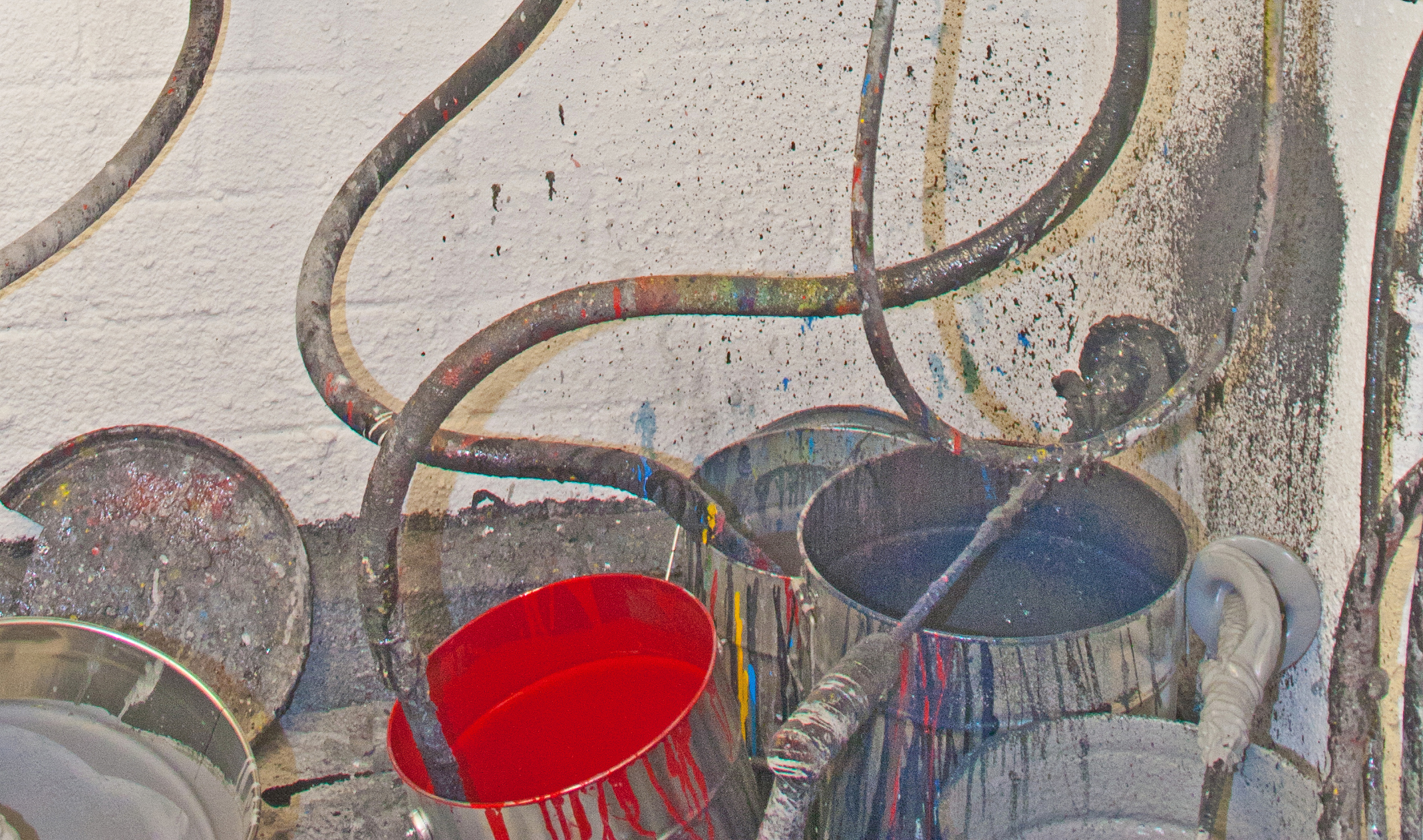
Kristallartige Partikel bedrohen die Lunge
Humans are made up of 70 percent water, so when isocyanate-containing vapors are inhaled, polyurea particles are formed in the lungs. The small crystal-like polyurea particles damage the alveoli in the lungs, which can lead to severe and consequential respiratory diseases, usually over a period of years. Safety data sheets contain the classification of hazardous substances according to the EU directives with the so-called H and P phrases, which everyone who has to handle these substances should know in the interest of their own health. The "H" stands for Hazard Statements and the "P" for Precautionary Statements. Section 7 of the MSDS contains information on handling and storage. If the sentence "Do not inhale vapors!" is to be read here, extreme caution is required and suitable respiratory protection is mandatory. This applies not only to painting, for example when the paint is atomized, but also from the moment the corresponding containers are opened, such as during filling, weighing, mixing, etc.. Here, even the smallest quantities can evaporate, which, in the case of corresponding long-term exposure, can lead to the above-mentioned damage to health.
German Research Association for Surface Treatment (DFO)
www.dfo-service.de