
Paint mist separation and water treatment sustainable and cost-optimized
Optimales Verfahren zur Lacknebelabscheidung auswählen
(Feb. 2020/OM) - In order to operate a paint mist separation system in the most cost-optimized and sustainable way, paint stores must consider a variety of requirements to select the optimal process for their operation: the dry or wet scrubbing process.
(K
Resources, emissions and operator expertise, among other factors, have the greatest influence on the decision. When selecting the optimum paint mist separation process for a particular operation, it is necessary to decide between investment and operating costs and to weigh up sustainability factors. Likewise, site-specific and operational aspects must be considered and planned for a rebuild or new construction. In addition, there are issues such as ensuring operational safety, effective and cost-efficient treatment processes, and optimal water and waste management. Given the complexity of the task, it makes sense to involve experienced industry experts with expertise in water technology to assist in the selection process.
The advantages and disadvantages of the dry separation process and the wet leaching process must be thoroughly weighed. For example, new technologies in the dry separation process can significantly reduce both water and energy consumption. In contrast, extended logistics and increased waste disposal (up to a factor of 10) for the dry separation material must be considered.
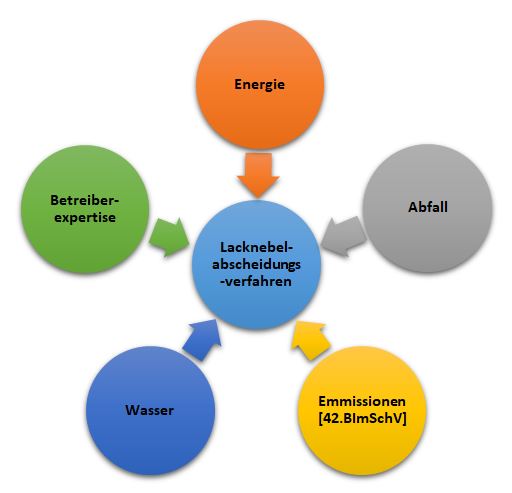
Furthermore, since the 42nd BImSchV came into force, plant operators have been faced with additional mandatory requirements and tasks that affect wet scrubbers and thus wet scrubbing in paint shops. For operators, this often means new tasks and an increased time commitment. An experienced partner for industrial water treatment can provide recommendations and guidance on the 42nd BImSchV. Specifically, the support can include the following areas:
- Checklist for operators of paint shops
- Communication with authorities | Cadastre
- Laboratory tests |
- Risk assessment | Operational diary
- Review and assessment of the effectiveness of the microbiological treatment process
- Preparation of an action plan
- Implementation of an action plan including application and dosage recommendations of biocides
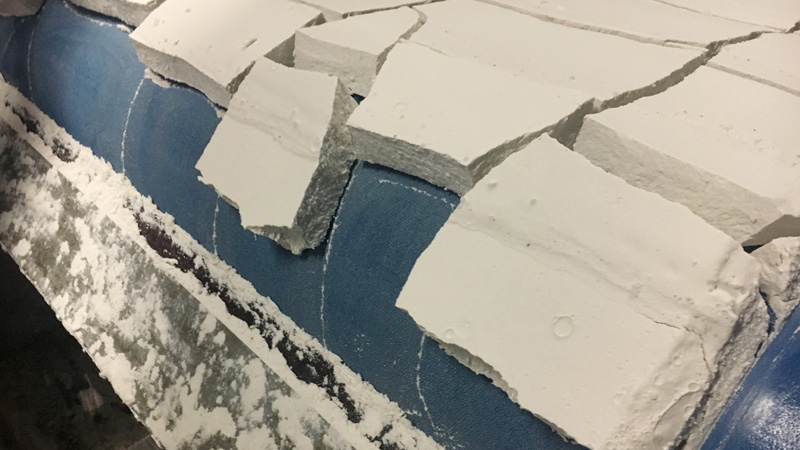
Within the scope of support models, Envirochemie determines savings potentials and plant optimizations for customers and shows approaches to solutions, such as the optimization of operating costs for paint coagulation through the use of a vacuum belt filter for paint wastewater treatment.
In the wet scrubbing of paint overspray, continuous solids discharge and the quality of the subsequent paint sludge dewatering play a decisive role in optimizing plant operation and costs. The basis for optimum dewatering is the establishment of a chemical process for paint coagulation that ensures the best possible dry substance content (DS content) of the discharged paint sludge over the widest possible operating spectrum and a wide variety of paint types. Typical requirements are:
- Avoidance of foaming of the system water, which among other things leads to insufficient paint sludge discharge, especially in flotation plants.
- Complete detackification and denaturation of the coating solids
- Comprehensive coagulation of the paint particles (-> microfloc) and formation of an optimal floc (-> macrofloc), which is the prerequisite for a well flotable or sedimentable sludge that can be discharged.
- Optimal final paint sludge treatment by stable and qualitatively well dewaterable flocs.
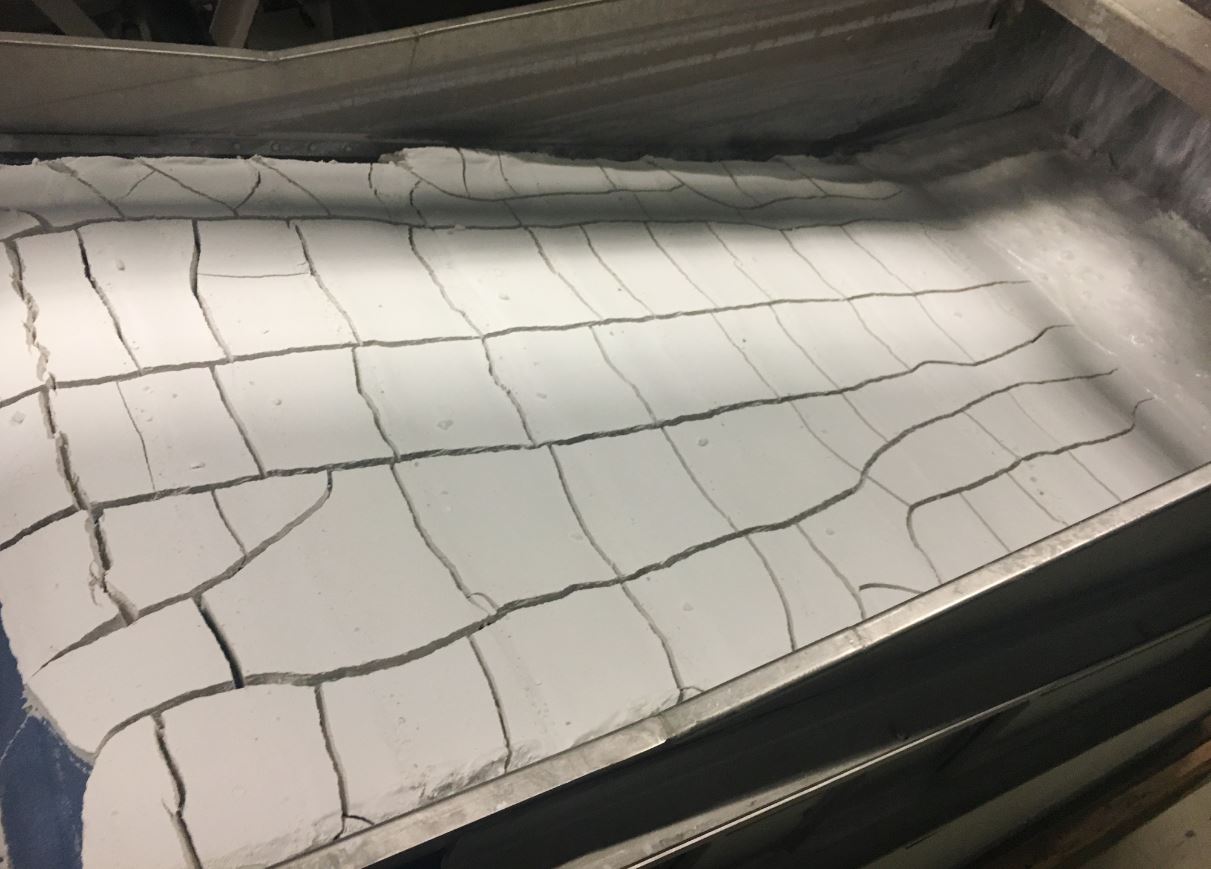
Practical example: paint sludge treatment for an automobile manufacturer
In two-shift operation, Envirochemie is in charge of paint coagulation and paint sludge treatment at a German automotive manufacturer. As part of this cooperation, the paint sludge treatment process using vacuum belt filters was to be optimized, i.e. the dewatering results were to be improved as far as possible and the paint sludge disposal was to be ensured continuously. The automotive manufacturer also wanted to reduce operating and maintenance costs for the current dewatering process using decanters/centrifuges and minimize upcoming investment costs. During a three-month on-site trial, Envirochemie identified optimization potential and implemented it together with the customer. In addition, Envirochemie supplied the water chemicals tailored to the operation from its own production.
Conclusion
The three-month practical test at an automotive manufacturer has shown that with water chemicals matched to the process and optimally adjusted plant parameters, the paint sludge can be reliably discharged and disposed of because the batch run times are reduced by 50%. Unplanned additional costs for disposal are avoided. Operating and maintenance costs are reduced by 50%. The use of a vacuum belt filter for dewatering the paint sludge even leads to a 75% reduction in energy costs.
In existing plants for water treatment and paint sludge dewatering in paint stores, it is worthwhile reviewing the treatment processes and parameters. Together with experienced partners, significant improvements can be achieved here in terms of resource- and energy-efficient operation, without compromising quality.
The project frame data
Production: 340,000 cars/year Painting process: IPP process Coatings used: KTL, WB basecoat, SB 2K clearcoat Paint manufacturer: BASF, PPG
EnviroChemie GmbH
www.envirochemie.com