

Optimum grip when it counts
New UV-curing anti-slip-coatings also for critical use-cases
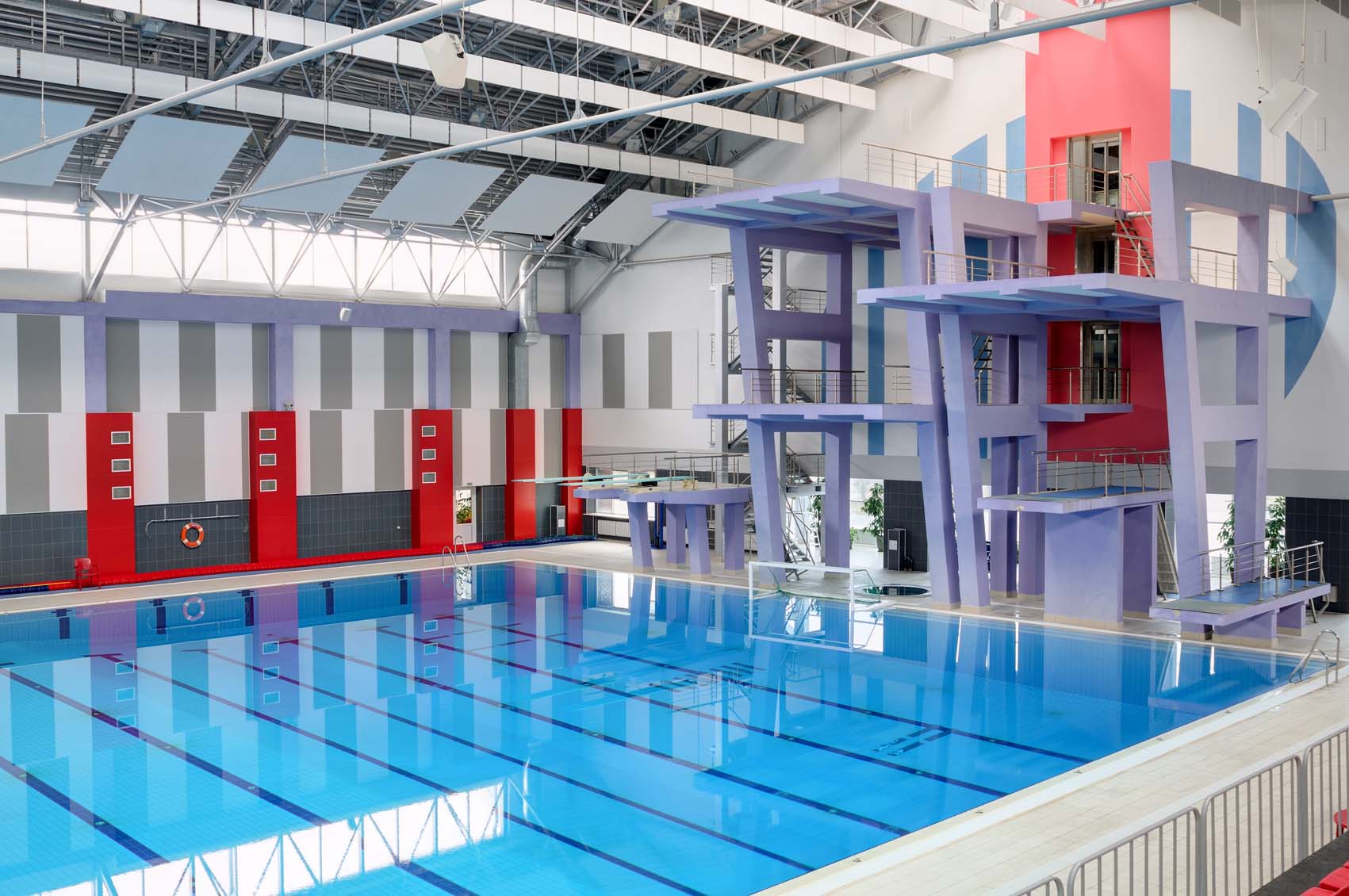
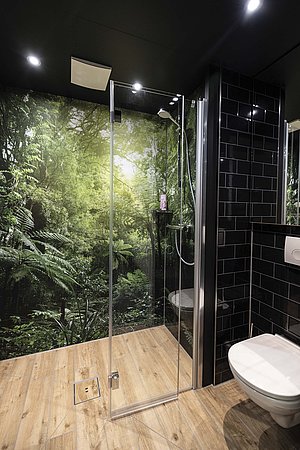
According to the occupational accident statistics of the German Social Accident Insurance (DGUV) from 2019, tripping, slipping and falling are among the focal points of accidents. 21.7 percent of all reportable accidents are attributable to this. Falls are also by far the leading cause of accidents in private households. This makes it all the more important to significantly minimize the sources of danger. The quality of floor coverings plays a key role in this. Anti-slip coatings are used on floor surfaces to ensure safe walking even in the presence of substances that promote slipping, such as wetness, oils and dust. For example, anti-slip coatings are used in access areas of trains and streetcars as well as department stores and on ramps. Anti-slip coatings provide walking safety on smooth tiled surfaces in bathrooms. Slip resistance is mainly assessed by means of product-related type testing of floor coverings. The currently valid test procedures are governed by the standards DIN 51 130 and DIN 51 097. The requirements for the slip resistance of floor coverings are always based on the use-related substances that occur or are likely to occur. In particular, a distinction is made between areas that are generally largely dry and are walked on with shoes and wet areas that are mainly used barefoot. The so-called R classes are used in areas that are used with shoes. They are tested using the "inclined plane" method according to DIN 51130. The classification is based on the mean total acceptance angle (Table 1 in the online version of this article). In areas such as swimming pools, saunas and showers, which are walked on barefoot and are contaminated with water due to use, so-called A-B-C classes are used (Table 2 in the online version of this article). Testing is also carried out using the "inclined plane" method according to DIN 51 097.
Anti-Slip-Coatings in practical usage
For on-site application, mainly classic solvent-based or waterborne floor coatings are available. When the coatings are applied on site, the anti-slip properties are either adjusted by sprinkling granules such as corundum or quartz sand into the wet coating, or the granules have already been incorporated into the coating system. This manual processing can result in the R-class of the anti-slip coating, which has previously been tested as a type, either not being achieved or also being exceeded. Industrially processed anti-slip coatings offer the advantage that the system conditions and application quantities can be precisely specified, resulting in very uniform surfaces that correspond to the slip resistance of the surfaces tested for approval. The application is advantageously carried out with the aid of rolling equipment, which ensures a uniform application quantity and, in contrast to spraying equipment, shows fewer signs of wear. UV-curing anti-slip coatings, which cure in a flash with the aid of UV light, are particularly suitable for roller application. The throughput speeds for industrial rolling are eight to twelve meters per minute, depending on the required application quantity. Materials such as films can also be applied from roll to roll with UV-curing coatings. The coating of two-dimensional, digitally printed aluminum plates is also state of the art. For the new development of UV-curable anti-slip coatings, the focus is on customer requirements. On the one hand, the required slip resistance classes must be met, and on the other hand, the appearance, feel, cleanability, adhesion, chemical resistance, and abrasion and scratch resistance must also comply with the specifications.
Evaluation groups
| Evaluation group Minimum slope angle Application area | ||
|---|---|---|
| A 12° - barefoot walkways and sanitary areas, sauna and rest areas, largely dry | ||
| - Pool floors in non-swimmer areas (water depth >80 cm ) | ||
| B 18° - barefoot walkways and sanitary areas (not assigned to A) | ||
| - Shower rooms and shower areas, steam baths | ||
| - Pool floors non-swimmers, water depth < 80 cm | ||
| • Leitern und Treppen außerhalb des Beckenbereiches, begehbare Oberflächen von Sprungplattformen und Sprungbrettanlagen (nicht C zugeordnet) | ||
| • Sauna und Ruhebereiche (nicht A zugeordnet) | ||
| C | 24° | • Ins Wasser führende Leitern und Treppen, Aufgänge zu Sprunganlagen und Wasser rutschen |
| • Oberflächen von Sprungplattformen und Sprungbrettern (Anlauf- und Sprungbereich) | ||
| • Durchschreitebecken | ||
| • Geneigte Beckenrandausbildung | ||
| • Rampen Beckenumgangsbereich, Neigung >6 %</80>. < 80 cm | ||
| • Leitern und Treppen außerhalb des Beckenbereiches, begehbare Oberflächen von Sprungplattformen und Sprungbrettanlagen (nicht C zugeordnet) | ||
| • Sauna und Ruhebereiche (nicht A zugeordnet) | ||
| C | 24° | • Ins Wasser führende Leitern und Treppen, Aufgänge zu Sprunganlagen und Wasser rutschen |
| • Oberflächen von Sprungplattformen und Sprungbrettern (Anlauf- und Sprungbereich) | ||
| • Durchschreitebecken | ||
| • Geneigte Beckenrandausbildung | ||
| • Rampen Beckenumgangsbereich, Neigung > | ||
| </80> |
Developement of a new UV-anti-slip-coating
The newly developed Freodur UV anti-slip coating system ES1927MRA999 from Frei Lacke scores with its excellent scratch and abrasion resistance and achieves the slip resistance classes R11 and B with an application quantity of about 40 grams per square meter. Detailed properties are shown in Table 3 in the online version of this article. The fillers used, with medium coarse particle sizes, are optimally matched to the coating base. They are already homogeneously distributed in the coating material. Despite the slightly rough surface, the coated area can be easily cleaned with common floor cleaners and water. The appearance of digitally printed surfaces is hardly affected due to the low coating thickness. With a solids content of 99 percent, the coating system is formulated to be virtually solvent-free.
Mean total acceptance angle
| Mean total acceptance angle "Class of slip resistance |
|---|
| (R group)" Range of application |
| 6° to 10° R 9 Minimum requirement for public rooms |
| > 10° to 19° R 10 Changing room and washroom, public toilets, health service rooms |
| > 19° to 27° R 11 Entrance area outside, sales outlets/rooms, communal kitchen |
| > 27° to 35° R 12 hospital kitchens, bakery production, industrial kitchens |
| > 35° R 13 industrial production of edible fat and oil, meat and fish processing |
The application-processes
The industrial rolling process is ideal for applying the UV-curing anti-slip coating to sheet materials and adhesive films, partly because of the fast throughput times of eight to twelve meters per minute and working widths of up to three meters. The process also combines uniform coating application with low coating consumption and minimal coating losses. The application technology itself now shows little signs of wear, and the very fast UV curing enables immediate further processing. To ensure the tested slip resistance, it should be noted that the application procedure and the application settings are explicit and mandatory. Changes in the process, such as conversion to a two-coat coating or modified roller grooving, can lead to changes in the surface properties and therefore require renewed testing and certification of the slip resistance.
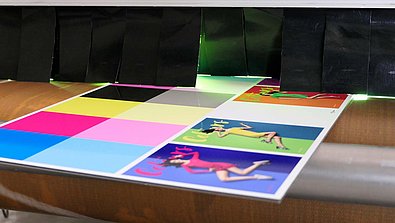
12 m/min without affecting a previous decor print.
Applications for new coating-system
Preferred areas of application for the new UV-curing anti-slip coating from FreiLacke are wet barefoot areas in showers and sanitary rooms, advertising surfaces on floors in entrance areas of department stores, or walk-on information stickers on floors in public buildings, airports and train stations. In all these applications, the Freodour UV anti-slip coating ES1927MRA999 meets the requirements in terms of safety and durability. It has proven to be well suited for industrial coating of printed films, coated and printed sheet materials, while at the same time the fast and uniform application offers significant advantages compared to conventionally drying systems.
► Emil Frei GmbH & Co. KG ► www.freilacke.de
Paint properties and test methods
| Test Standard / Conditions Substrate Evaluation | |||
|---|---|---|---|
| Adhesion EN ISO 2409 PVC film Gt 0 | |||
| Aluminum coilcoated Gt 0 | |||
| ES1919HR2595 Gt 0 | |||
| Slip resistance Walk-on method according to DIN 51130 and DIN 51097 Aluminum coilcoated R11 | |||
| B | |||
| Abrasion test Taber Abraser CS-10, 500g, 500 revolutions Aluminum coilcoated Abrasion 18 mg | |||
| Scratch resistance Scratch hardness tester 413 Erichsen DIN 68861-4, test tip diamond (DIN EN 438-2) Aluminum coilcoated 2 N | |||
| Chemical stress DIN EN ISO 68861-1 at room temperature Aluminum coilcoated 1B | |||
| Erich indentation DIN EN ISO 1520 Aluminum coilcoated 2 mm | |||
| Steam jet test 70bar; 60°C; 15-20cm; 45° Aluminum coilcoated spalling St. Andrew's cross: none | |||
| Condensation water constant climate DIN EN ISO 6270-2 CH Aluminum coilcoated Gt 1mm: Gt 0 | |||
| Bubbles: 0(S0) | |||
| Rust: Ri 0 |