

Bonded coating instead of grease
Modern lubricants - the sustainable all-rounders: New, water-based bonded coatings benefit from the trend toward sustainability
Wherever things move, friction occurs. And friction, simply put, is pure energy destruction. It is estimated that around a quarter of global energy consumption is due to friction losses. Modern lubricants make an important contribution to conserving resources and improving the CO2 footprint. With their broad performance spectrum, they not only reduce friction and thus save energy, but also protect against wear, extend maintenance intervals and machine running times, prevent material abrasion or protect against corrosion. Modern, sustainable lubricants offer their users not only an increase in process efficiency and the associated reduction in costs, but also an improvement in their own footprint and that of their customers.
The problem: New legal directives and regulations such as REACH increase the requirements for approved lubricants and demand new technical solutions from manufacturers. Nevertheless, many lubricants and bonded coatings are still mineral oil-based. On the user side, therefore, lubricants, their production, application and disposal, are increasingly coming into focus. This is because the greatest potential for improving the CO2 footprint lies in the so-called Scope 3 emissions according to the Greenhouse Gas Protocol, i.e. the emissions in the upstream and downstream process chain.
Modern lubricants improve the user's footprint
More and more manufacturing companies are therefore focusing not only on making their own business processes more efficient, sustainable and resource-conserving, but also on helping to reduce the user's footprint. This is generally referred to as a company's handprint. Here, modern, water-based bonded coatings offer interesting tribological and technical solutions. This is because they do not require mineral oil-based solvents, enable lifetime lubrication with constant coefficients of friction, offer corrosion protection, do not lead to contamination, minimize assembly and maintenance requirements and, above all, have an extremely wide thermal application range. For the latter, OKS 546 is exemplary. This is a thermosetting, water-based bonded coating based on graphite with an application temperature of up to 630°C. The curing time of approx. three minutes at 190°C is very short, so that this coating can also be used in production, e.g. for forming. Among other things, OKS 546 is used in the manufacture of special sleeves that have to be expanded with a fusiform spindle and coated on the inside to reduce friction and ensure a smooth surface.
The only disadvantage of bonded coatings is that they can only replace common lubricants such as oils and greases to a limited extent, as their use must be pre-planned in terms of design.Nevertheless, they are becoming increasingly important both for original equipment / OEM and for maintenance and repair against the background of sustainability and cost reduction. This is favored by the following trends:Leading suppliers such as OKS Specialty Lubricants have, thanks to their research and development, significantly expanded the product range and application areas of water-based bonded coatings in recent years and eliminated their initial problems. Whether it's foam formation, pigments flowing away, microbiological decomposition of the products or the risk of corrosion on the metallic surfaces to be coated - all this is a thing of the past with products of the latest generation.
Due to weight and thus energy efficiency considerations, plastics are increasingly being used instead of metal for moving parts. When it comes to lubricating plastic parts, the new bonded coatings are clearly superior to other lubricants, partly because mechanical pretreatment of the surface is no longer necessary. One example is OKS 549/3, a water-based bonded coating specially developed for coating plastics and elastomers. It contains a combination of MoS2, graphite and PTFE. This bonded coating cross-links with the surface of the plastic or elastomer and does not flake off even under extreme mechanical stress. The crosslinking temperature is only 120°C. This type of bonded coating is used, for example, to coat seals in rotary joints of robots in very dusty production areas. Oil-based lubricants would lead to increased dust adhesion and thus to increased wear of the seals.
Another trend in favor of bonded coatings is noise reduction. Particularly in the automotive industry, which is one of the largest user sectors for bonded coatings, the switch to electromobility is placing even higher demands on the noise-free connection of components. Here, bonded coatings with their separating and at the same time lubricating effect without smearing other components are ideal, also because they can exploit their advantage of lifetime lubrication.
(Kopie 3)
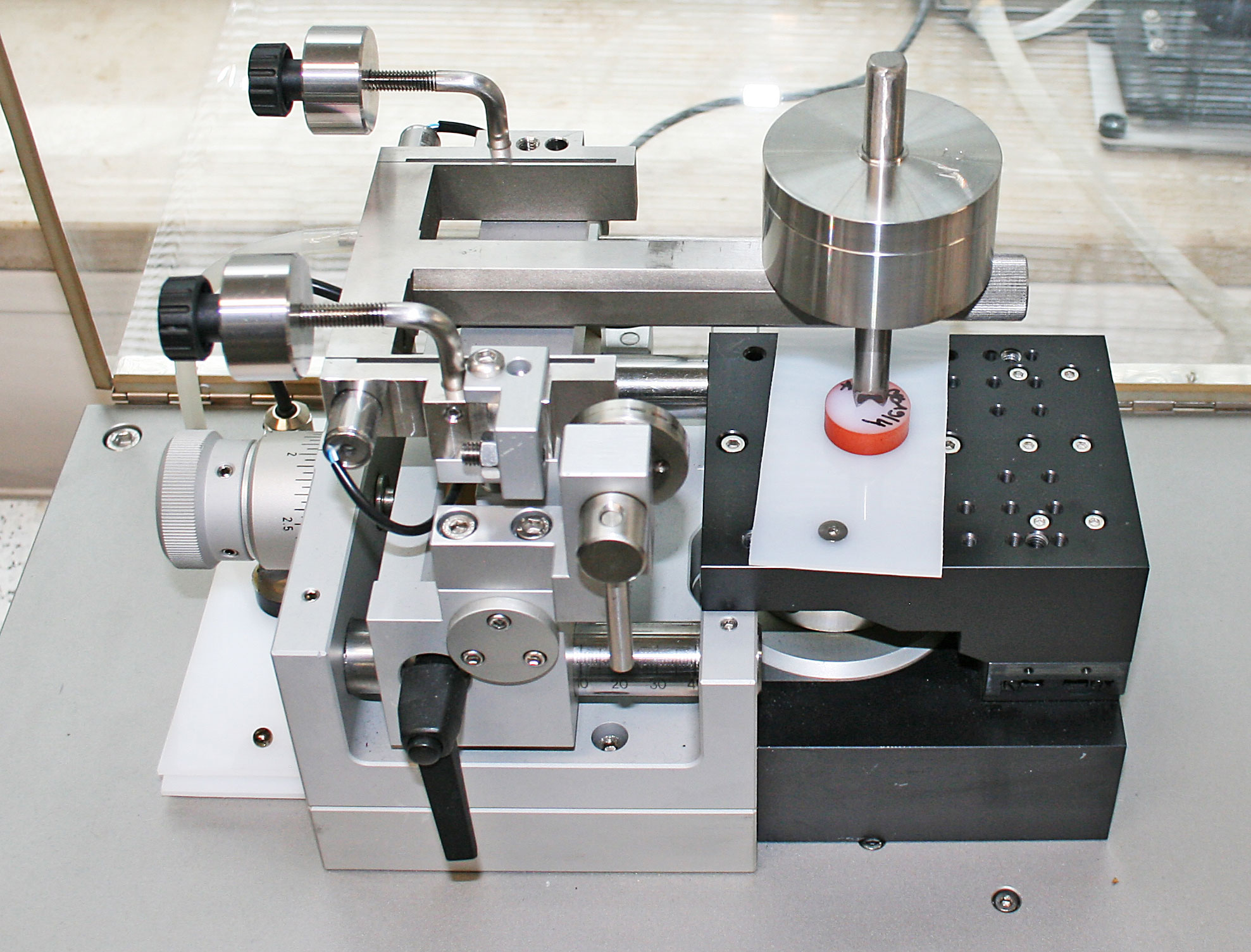
Processing of waterborne bonded coatings
Whether water- or solvent-based bonded coatings, the structure is basically the same. In both cases, the solid lubricant (usually MoS2, graphite or PTFE) is incorporated in an organic or inorganic binder. Instead of a conventional solvent, only water is added to VOC-free bonded coatings for distribution, which evaporates during the drying time. There are hardly any differences to be observed during processing. After thorough cleaning of the surface, the coating is applied either by dipping, spraying or brushing. Water-based coatings, however, require longer evaporation times and, just like their solvent-based counterpart, thermal curing after drying. Metal surfaces must be grease-free and dry before the bonded coating is applied. In addition, roughening or phosphating can improve the adhesion of the bonded coating. In the case of plastics, the advantage of the new water-based OKS bonded coatings is that they crosslink directly with the surface, so that additional pretreatment for cleaning is no longer necessary.
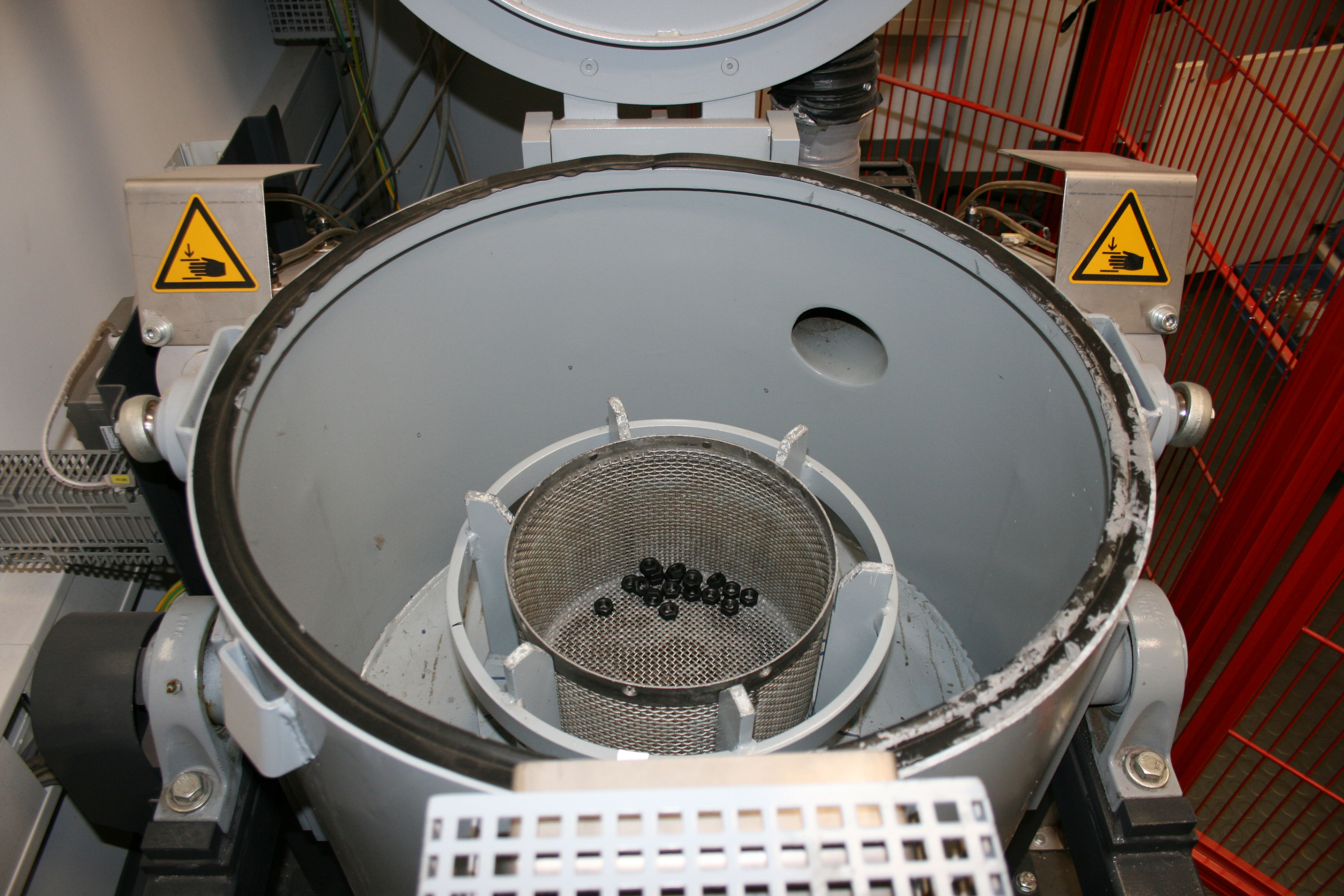
For application, the usual methods also used for conventional coating systems are available to the coaters. Depending on the area of application, the following rough subdivision can be made: If the components to be coated are not visible in the subsequent application, dipping systems or centrifuges can be used for cost-effective application, especially for small mass-produced parts. If, on the other hand, the components are visible later on and an attractive surface appearance is expected, spraying is the most suitable method.
Conclusion
The issue of sustainability is forcing companies to record and reduce not only their direct emissions (Scope 1 and 2) but also those of the upstream and downstream value chain (Scope3). This is where the greatest potential currently lies, and it can be leveraged quickly at the same time. Precisely because lubricants are found in almost all processes, they are of great importance. For example, the energy savings potential through the implementation of tribological concepts alone is estimated at 30 to 40 %. Bonded coatings in particular benefit from this development, because their lifetime lubrication reduces operating costs thanks to eliminated or reduced maintenance, and there is no need to dispose of old lubricants. The coefficients of friction are constant over the entire service life, thus enabling reliable function over the lifetime of a component, which helps to conserve resources, and they do not diffuse into the environment during operation, which is particularly crucial in applications with high hygiene & environmental requirements.
The processing industry is therefore well advised to pay greater attention to the lubricants used, and especially to bonded coatings, from a sustainability perspective in the future. Here, the specialists at OKS Spezialschmierstoffe GmbH, with their extensive tribological knowledge and application expertise, are on hand to help companies find the optimum bonded coating solution for their application.
OKS Spezialschmierstoffe GmbH
www.oks-germany.com