
A combined solution for fine dust reduction
Pre-cleaning with air followed by precision cleaning using wiping devices
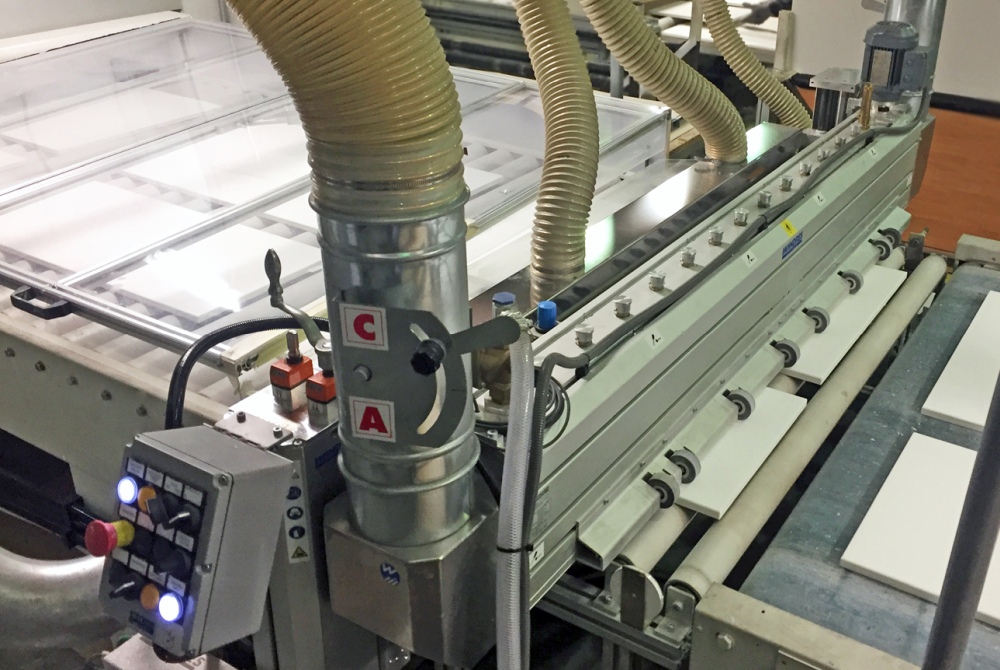
Particularly with very high-quality surfaces, incompletely cleaned fine dust is a problem and can lead to high scrap rates. A combination of blowing off and Sword Brush can prevent this.
Usually, various cleaning devices such as compressed air nozzles or slot-type suction strips are installed in the discharge area of grinding machines. However, after non-contact cleaning, there are usually still significant amounts of fine dust on the product surfaces. Even cleaning methods with round brushes are usually not able to cope with the high amount of dust, since the fine dust quickly saturates the brushes and does not lead to stable results in the long run. The company Wandres GmbH micro-cleaning from Stegen in the southern Black Forest has developed a cleaning technique with which fine grinding dust can be reliably removed even in continuous operation. Numerous manufacturers have already integrated this technology into their systems and have since benefited from stable production processes and lower reject rates.
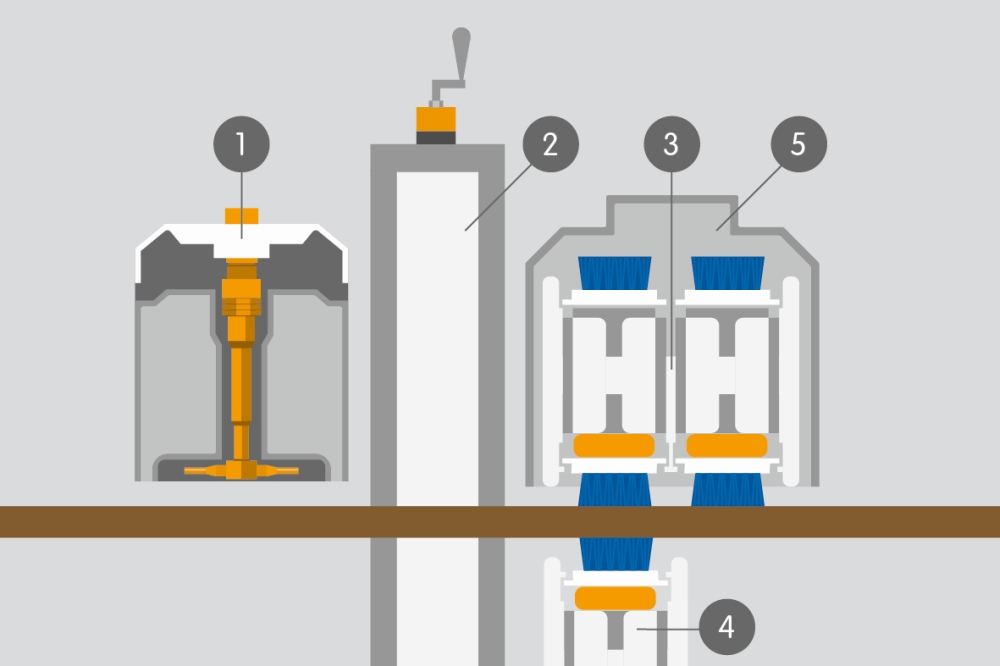
Wiping fine cleaning with Sword Brush
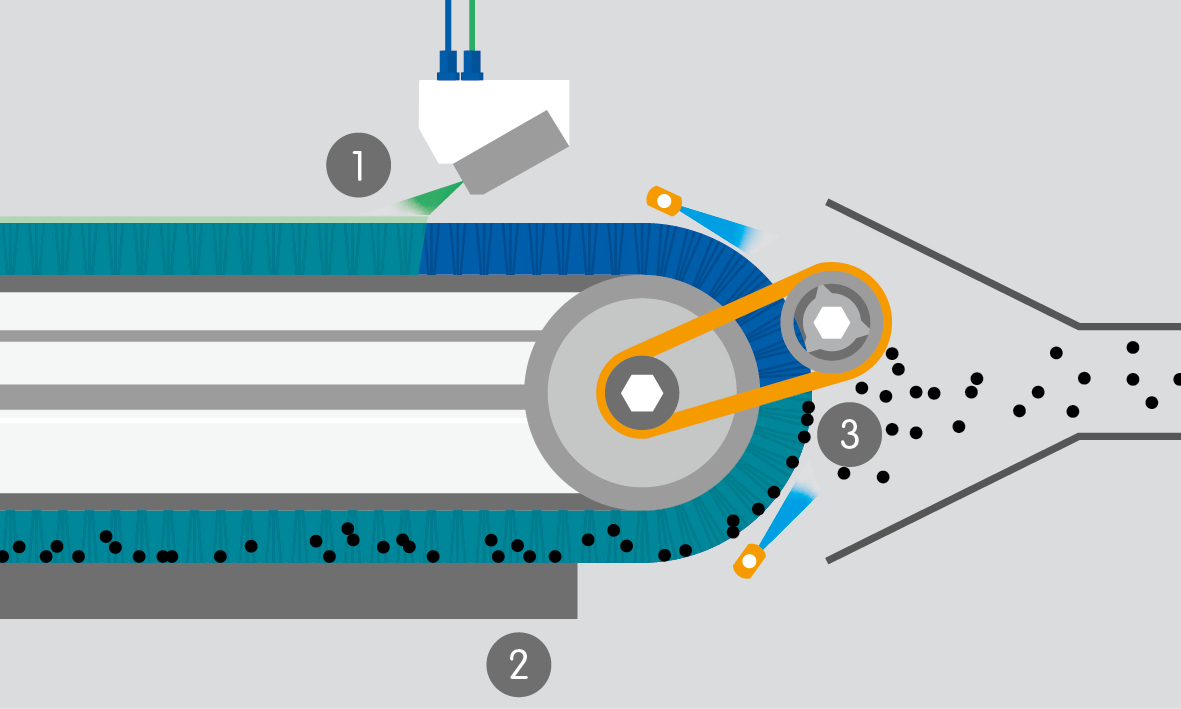
A power sword brush is located in the discharge: Two linear brushes wipe across the surface and remove any remaining particles from the surface. A pneumatically regulated pressure buffer in the work tower ensures constant pressure on the surface. The Sword Brushes clean the surfaces using the Ingromat process, which has already proven its worth in numerous applications. In this process, filaments of the brushes are lightly wetted with the Ingromat cleaning agent. The increased adhesive force in this way means that even the finest particles are picked up while the linear brush wipes across the surface. The surface remains dry and the subsequent painting process is not impaired.
To achieve a constant cleanliness result, the Sword Brushes have a self-cleaning unit which removes the picked-up particles by means of squeegees and compressed air nozzles and feeds them to the suction system. In contrast to wheel brushes, this process has a decisive advantage: Since the filaments are permanently regenerated, the high cleaning performance remains constant even in long-term operation. Depending on the amount of dust and the surface structure, it may be advisable to reinforce the suction with an additional hood above the brushes. It is also possible to clean the underside of the plates with another Sword Brush to prevent particles from being carried over the transport system.
Testing on own surfaces in the pilot plant
In practice, the requirements for the cleaning process depend on the structure of the surface, the type of pretreatment, the primer applied and the throughput speed. The respective cleaning result can therefore best be determined by a practical cleaning test on the customer's own surfaces. For this purpose, the technical center of Wandres is equipped with a demo unit on which different cleaning units can be combined. Before the cleaning run, the transport speed is also precisely determined.
"This gives us the opportunity to directly demonstrate the appropriate solution to our customers on their own product surfaces," reports Martin Tritschler, Head of Sales Panel & Web Industry. "Then the appropriate cleaning system can be configured according to customer-specific dimensions and integrated into the production line. For cleaning after intermediate coating sanding, we recommend the Una H-XL 723 combination sword brush. The system has already proven to be the optimum solution in numerous coating lines at typical speeds in the range of ten meters per minute." Due to the low installation depth, integration into existing lines is usually possible without any problems. Adjustment to the panel thickness is made at the adjustment unit supplied, or optionally via an electric control system.
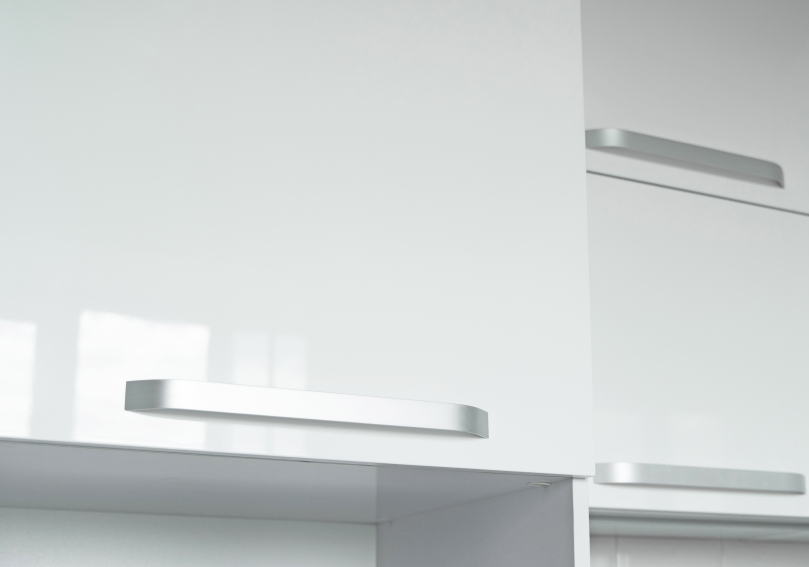
Differences in cleaning quality become particularly noticeable quickly when the coating is applied in very thin layers, because with thinner layers there is less coating material that could compensate for or conceal fine dust. As a result, this quickly leads to particle inclusions and chipping. Particularly with high-gloss surfaces, even the smallest defects are very clearly visible. The consequences are high reject rates and costly rework. With the new cleaning technology, these defects can be avoided and an economical coating process with brilliant high-gloss effects can be achieved.
Combined air and wiping cleaning with Combi Sword Brushes has already passed the practical test in industrial wood and furniture coating several times with flying colors. When Tornado Channels and Sword Brushes are used in modern production lines, particle-related scrap is usually drastically reduced and the paint film thickness can often be significantly reduced.
This has a positive effect on product quality, especially for high-gloss surfaces. In addition, paint is saved and there are fewer production stoppages. Working conditions for the workers are also improved, as there are fewer dust particles in the production environment. The combination of Tornado Channel and Sword Brush offers the technical prerequisites for cost-effective and reproducible production of furniture fronts with an excellent surface finish at low operating and maintenance costs.
Wandres GmbH
www.wandres.com