

CX corrosion load extreme - DIN EN ISO 12944-9 updated
Dünnere Beschichtungen auf feuerverzinktem Stahl möglich
(Feb. 2020/OM) - DIN EN ISO 12944 "Coating materials - Corrosion protection of steel structures by coating systems" standardizes corrosion protection by organic wet coating systems on "black" and also on hot-dip galvanized steel (duplex systems). The standard, most of which dates from 1998, has been completely updated and supplemented by the new Part 9, which regulates coating systems for structures in the offshore sector.
For the first time, the coating standard DIN EN ISO 12944 takes the longevity of hot-dip galvanized steel into account to some extent and allows coatings on hot-dip galvanized steel to be one-third thinner and also permits this for offshore applications subject to high corrosion loads. Table 3 of Part 9 identifies the minimum requirements for coating systems and their initial performance.
Comparing the requirements for corrosivity category CX (corrosion exposure: extreme), which includes offshore areas with high salt exposure such as oil platforms and wind farms, but also industrial areas with extreme humidity and aggressive atmospheres, it can be seen that coatings on hot-dip galvanized steel can be made thinner and with fewer layers (see Table 1). The minimum number of layers is given here as 2 and the minimum nominal layer thickness on the metallic coatings is given as ≥ 200 µm.
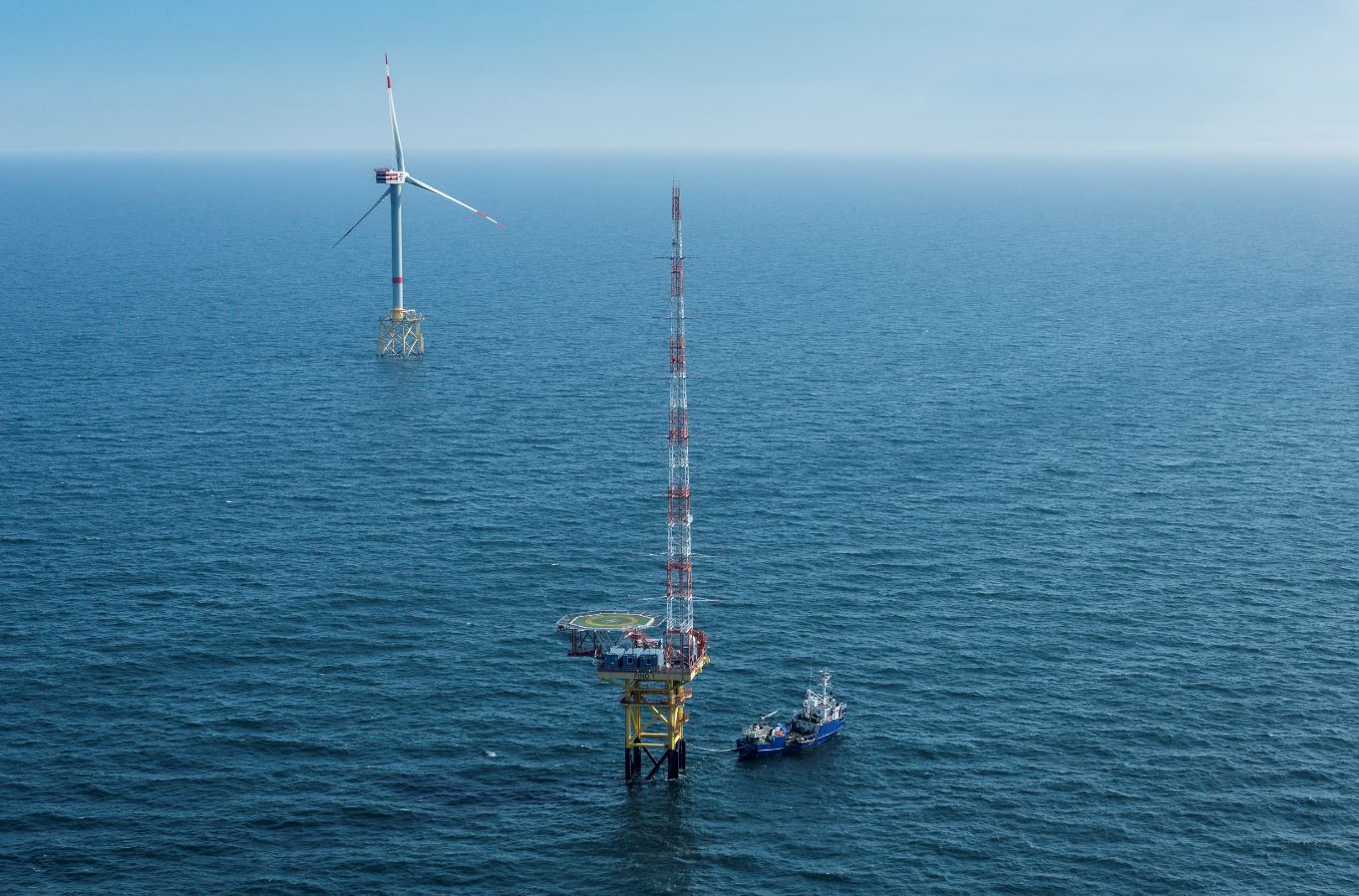
Duplex systems are more durable: practical example Fino 1
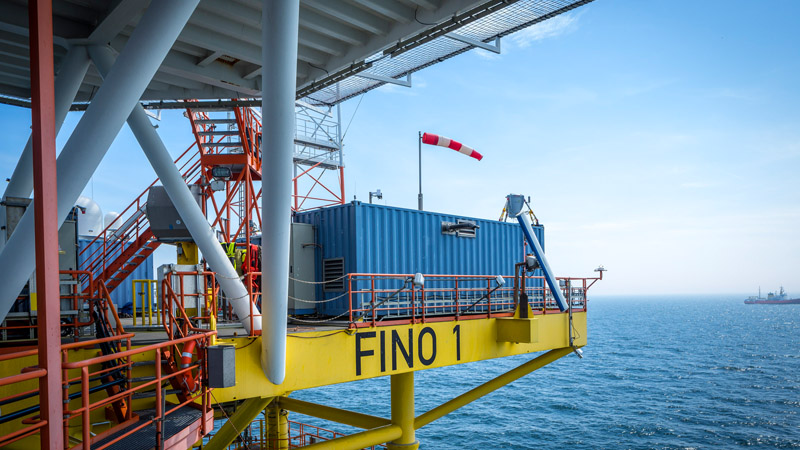
The higher durability of duplex systems compared to coatings is also demonstrated in practice. One example of this is the Fino 1 offshore research platform, which was built in 2003 and is located about 45 km north of the island of Borkum. On the basis of an on-site investigation, the actual condition of the corrosion protection was checked in 2013 and recorded in an expert report. Pure coating systems were predominantly used as corrosion protection for the Fino 1 platform. Exceptions were the railings of the catwalk and the ascent to the helicopter deck, which were executed as duplex systems. This allows a direct comparison of the corrosion protection. No defects in the form of corrosion were found on the steel components designed as duplex systems after 10 years of use under very high corrosion loads. In contrast, the coated areas of the upper jacket showed various, in some cases considerable, signs of corrosion, which extended to rust-through. The direct practical comparison using the example of Fino 1 shows that duplex systems are significantly more durable in the offshore sector than comparable coating-only systems.
The requirements for the preparation of uncoated surfaces for offshore components correspond to the requirements of Table B1 of DIN EN ISO 12944-5. Accordingly, hot-dip galvanized steels are to be prepared by sweep blasting in accordance with ISO 12944-4, while "black" steels are to be blasted in accordance with Sa 2 ½. Part 9 of the standard specifies separate qualification tests for coating materials.
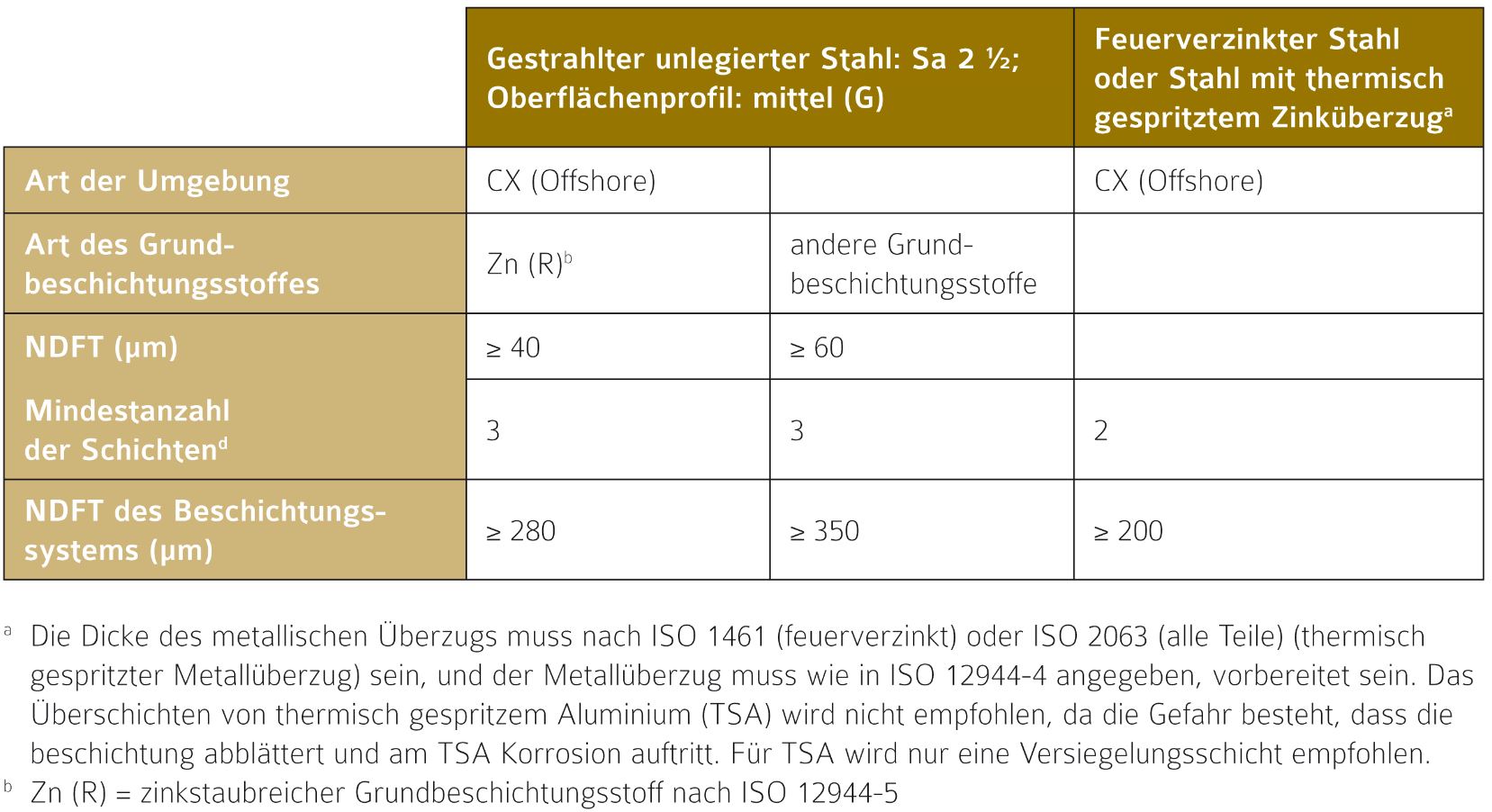
Conclusion: Coatings on hot-dip galvanized steel can be lower in terms of the number of layers and in the minimum nominal layer thickness than pure coatings on blasted steel substrates without a metallic coating. DIN EN ISO 12944-9 thus takes into account the higher durability of duplex systems, consisting of hot-dip galvanizing and coating.