
Dedicated to corrosion protection
Die Seppeler Gruppe feiert 100 Jahre Jubiläum
(Oct. 2019/OM) - In the beginning there were tubes and sheet metal goods: In the hundred years of its existence, the Seppeler Group has developed into a flexible group of companies. Competence in hot-dip galvanizing and customer orientation are the key foundations for its long-standing success.
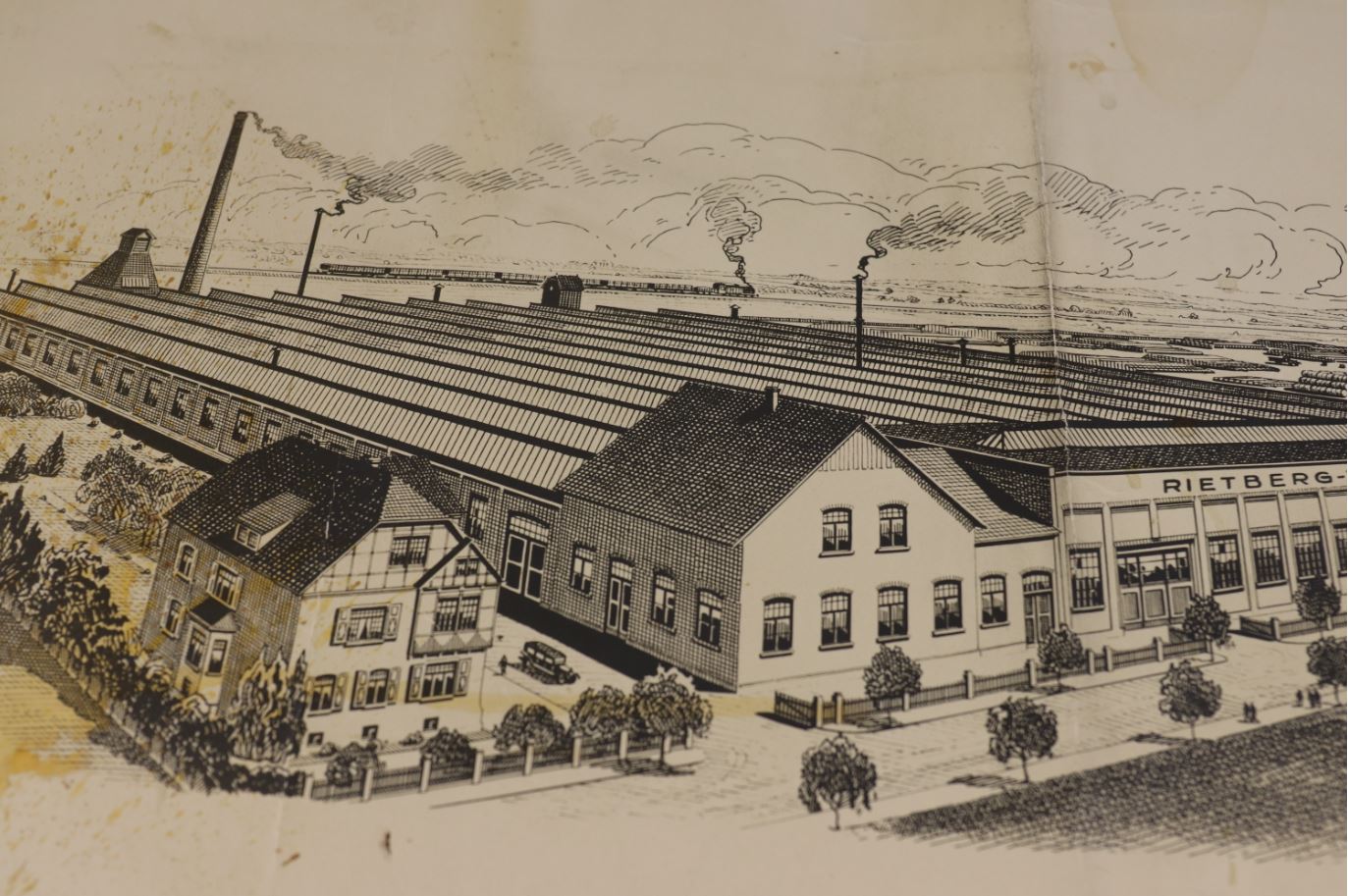
Rietberg - the city in the district of Gütersloh with its approximately 31,000 inhabitants is a place worth living in an economically healthy region. However, the name Rietberg is known in the industry primarily because a very specific company is based here: Rietbergwerke. And this has been the case for 100 years. Rietbergwerke is the nucleus of today's Seppeler Group. Today, the Group is one of the leading suppliers of tanks and, above all, of hot-dip galvanizing and corrosion protection. It comprises 14 companies and 19 operating divisions in Germany and Poland with 1,400 employees.
It all started in 1919 with a tube and sheet metal goods factory. "Since our roots lie in the processing of metal, we are still a competent partner for our customers today, also in all constructive areas," reports Kai Seppeler, who today chairs the supervisory board of Seppeler Holding. He can still remember how, as a child, he took great pleasure in climbing onto the stacked barrels - much to the displeasure of his father. This was because the barrels received their corrosion protection in the company's own galvanizing plant. This had been possible in Rietberg since 1922, albeit only for the company's own products. This was not to change until the 1960s.
Railroad electrification brings the boom
At that time, the German Federal Railroad electrified more and more railroad lines, so that there was a great need for galvanized line poles. Rietbergwerke took part in the tender and was awarded the contract. This order was the initial spark for the expansion of the service business at the site. From 1987, the range of services could be offered by coatings using the duplex process.
In addition to hot-dip galvanizing and tank construction, Rietbergwerke was also involved in agricultural engineering and the construction of test rigs. It was not until after the fall of the Berlin Wall that demand for grain drying equipment declined sharply, so that the company finally parted with this business in the mid-1990s. Similarly, the activities relating to test rigs were divested. In addition to tank construction, the focus was now primarily on hot-dip galvanizing, not least due to the commitment of Dr. Klaus Seppeler, the father of the current Chairman of the Supervisory Board, who is one of the founding members of the Hot-Dip Galvanizing Association. Through targeted acquisitions, the company succeeded in consistently expanding its market position with its own service portfolio in the years that followed.
Long steel parts perfectly coated
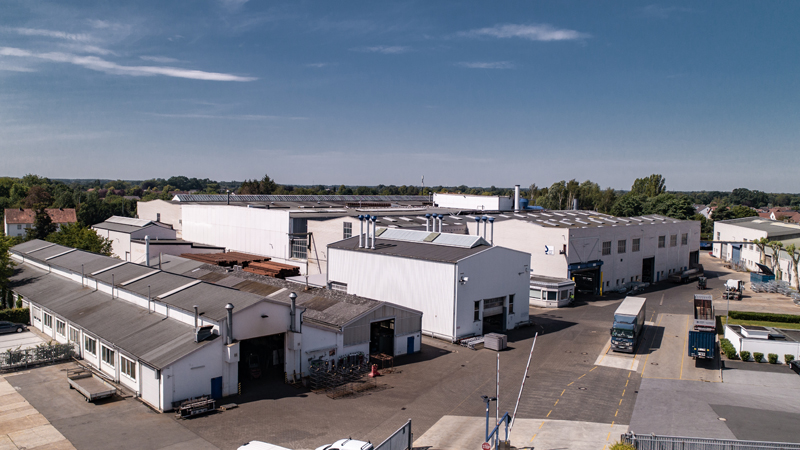
Today, it is mainly long steel parts, such as poles, noise protection posts, traffic sign supports, complex steel structures or other containers, which are galvanized and coated in Rietberg. Since January 2006, the plant has had a galvanizing tank of impressive dimensions: Steel parts up to 23 meters long, 4.80 meters high or 1.60 meters wide and weighing up to 10 tons can be galvanized here. In three halls they are prepared for coating and provided with different coating systems. A wide range of logistics services ensures that customers receive their goods when it suits them best. For example, steel beams are held in the company's own warehouse after galvanizing and delivered directly to the customer's construction site at the appropriate time, for example for parking garages or commercial halls.
For Thomas Weise, Managing Director of the Seppeler Group, the fact that Rietbergwerke is already so successful is the best proof that customer commitment pays off. And even more: "Above all, it shows that we've been able to meet our customers' needs and be a good partner to them over this long period of time." Meeting customer needs and adding value continues to be at the heart of what Seppeler does, he adds.
In addition to its comprehensive expertise for steel, it has always been its eye for the needs of employees and the overall organization that has moved the company forward - be it early delegation of responsibility, training and development, or numerous aspects of occupational safety.
In this spirit and with the experience gained from 100 years of company history, Rietberg looks positively to the future: "There are still a large number of application areas for hot-dip galvanized steel. Here we will continue to be closely at our customers' side in an advisory and operational capacity," says Managing Director Thomas Weise.
Highlights from 100 years
Rietbergwerke has seen many groundbreaking innovations in its years of existence. Here is a small selection:
1922: Construction of the company's own galvanizing plant with a kettle length of 4.2 meters. The following year, the first wrought-iron transport drums are produced.
1965: Rietberg builds the most modern hot-dip galvanizing plant in Europe: with the stately boiler dimension of 14.20 meters in length.
1984: The Container Technology Division produces the first special container for environmental protection: the Waste Oil Depot 950. The product line, designed according to the modular principle, has a pilot character in the market.
1992: Rietbergwerke carries out a research and development project on "Industrial Emulsions" with the University of GH-Paderborn. The aim is to find better solutions for the treatment and environmentally compatible disposal of liquids, especially cooling lubricants.
► Seppeler Group
► www.seppeler.de