


Cleaning with less energy
Reinigungsprozesse benötigen Energie. Verschiedene Maßnahmen können helfen, hier erheblich zu sparen
In view of rising electricity, oil and gas prices, energy efficiency is also becoming increasingly relevant for component cleaning. Measures to reduce energy consumption can be implemented in both existing and new cleaning systems.
Basically, it's simple: the most energy-saving and cost-effective cleaning is that which does not have to be carried out. Conversely, the less cleaning that is required, the lower the energy demand and cost. In addition to the choice of the right cleaning method and process, the amount of contamination introduced therefore influences the energy and time required. Here, potential savings can often be achieved without any technical changes to the plant. This includes checking part-specific process parameters once they have been defined. They are usually defined on the basis of a worst-case component, with treatment times of ten to 15 minutes or longer. If it is possible to avoid worst-case components and to enter the system with workpieces that have as little contamination as possible, treatment times can be significantly shortened and energy consumption reduced. This directs attention to the optimization of the pre-processes, where every production step must be examined from the point of view of technical cleanliness. The goal is to minimize net contamination before cleaning and keep it constant. One measure, for example, can be a simple intermediate cleaning step by blowing off or counter-rinsing with clean processing medium that is available anyway. In addition to improved energy efficiency, this procedure makes it possible to maintain and secure a certain quality level. At the same time, the reduced dirt load reduces the energy required for media preparation. In terms of plant and process engineering, various measures can reduce energy consumption. To prevent or minimize heat losses, piping and relevant plant components should be well insulated. Approaches are also offered by optimized mechanical processes that enable more effective and faster cleaning of particulate and filmic contaminants. For example, kinematic cleaning and drying, where the basket and nozzle system rotate in the same direction or in opposite directions, can save up to 20 percent of energy compared to static nozzle systems - based on the process-specific energy requirements of the machine. The positioning of the parts in the working chamber also influences energy consumption. They should be easily accessible from all sides for the medium and the process mechanics. This can be achieved by designing the bogie in the working chamber to be as open as possible.

Plant optimization options
In the case of units such as pumps, frequency control ensures that they are not constantly running at maximum output and thus wasting energy. Software solutions for efficient energy management, such as shutting down the plant to standby mode, also help save electricity. Heat recovery solutions, heat pumps and heat exchangers ensure that the energy used is kept in the cycle and does not have to be constantly replenished. Developments such as the Heat X heat exchange module make it possible to couple in heat from external sources (solar thermal, process heat, etc.). The costs for these solutions are still comparatively high in some cases, but the payback period is steadily shortening due to increased energy prices. Component drying is the largest energy consumer in cleaning with water-based media. More effective drying technologies therefore offer comparatively high potential for energy savings. Approaches include the combination of infrared and vacuum drying as well as steam drying. Condensation drying with a heat pump takes place at a temperature of between 20 and 90 °C, depending on the components and application. Compared with classic hot-air drying, savings of 75 percent and more can be achieved with these solutions.
Cleaning container for lower energy consumption
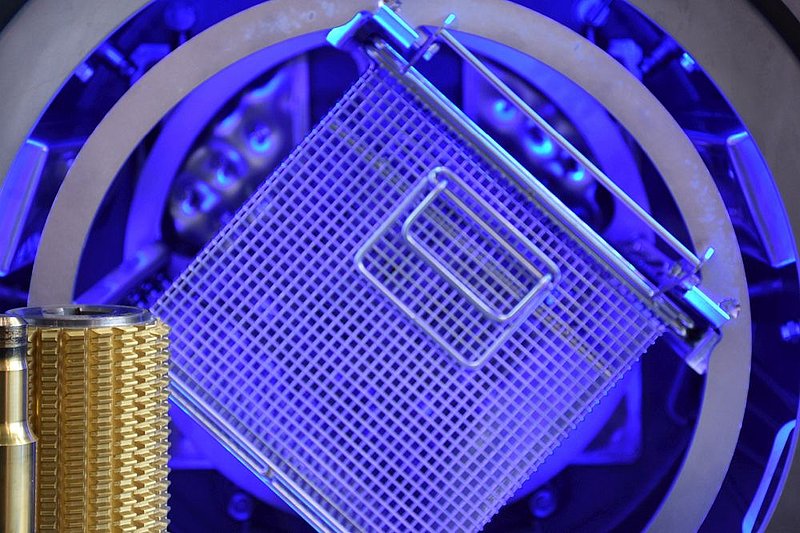
The cleaning container plays an important role from both an energy and quality point of view. Boxes made of galvanized perforated sheet prevent the process mechanics from reaching the parts without restriction and extend the cleaning time. The dripping behavior is also poorer, which makes significantly longer and thus more energy-intensive drying processes necessary. Cleaning baskets made of round wire, which ensure good accessibility on all sides, are optimal. Plant manufacturers provide support in the optimum design of cleaning processes and parameters and in the optimization of pre-processes through process analyses and other services. The development of solutions for the digitalization of cleaning processes and the use of artificial intelligence for the demand-oriented adaptation of cleaning are further steps taken by manufacturers for energy-efficient and CO2-reduced operation. Intelligent networking of building, supply and production technology also makes a contribution.