


Clean to the last atom
Die Präzisions- und Feinstreinigung erstreckt sich über den Submikrometer- und Atomprozentbereich.
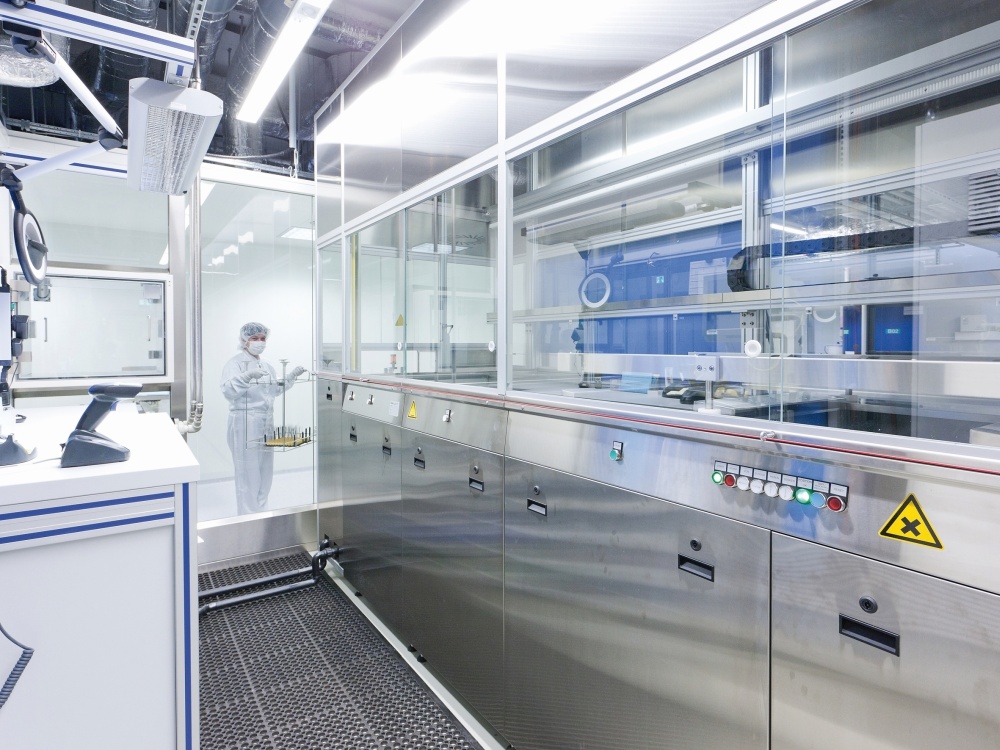
Modern manufacturing, joining and coating technologies in combination with strict regulatory requirements lead to ever higher demands on particulate and filmic component cleanliness. Meeting these values in series production requires needs-based processes, equipment and software.
New and further developed products lead to very high cleanliness specifications in many industrial sectors, especially if various joining and coating technologies play a role in their manufacture. Whether medical or biotechnology, production equipment for the semiconductor industry, laser and sensor technology, devices for measurement and analysis technology, components for accumulators and fuel cells, optical systems or machine tools - the demands on the performance and reliability of all these products are enormously high. This results not only in high demands on the manufacturing precision of the components, but also on their cleanliness. In the case of medical technology products such as implants, instruments, cannulas and endoscopes, particulate and filmic contamination from manufacturing processes is a key quality inspection criterion due to stricter regulatory requirements. In addition, there is a trend towards miniaturization and functional integration with ever smaller and more complex components.
These developments mean that particulate cleanliness specifications in the micro- and nanometer range as well as very strict specifications regarding residual film contamination are being demanded in more and more industrial sectors. Component- or application-specific outgassing rates for organic substances and residual moisture, as well as surface analyses for residues of prohibited substances, must also comply with limit values down to the atomic percent range.
In the production of these miniaturized parts, there is also a trend toward ever larger, integrated manufacturing modules. This also brings new challenges for the cleaning processes and the plant technology required for them.
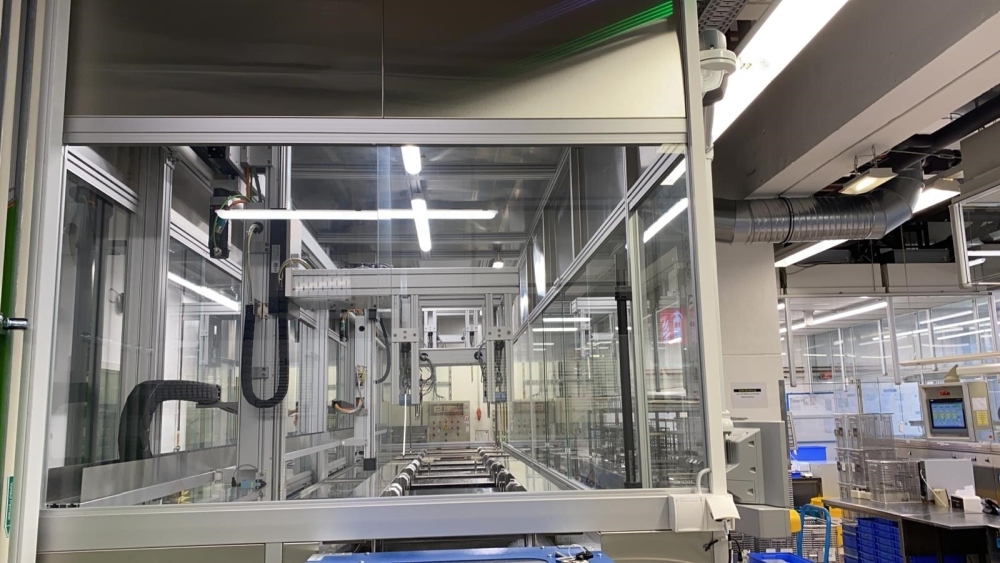
Broad spectrum of precision and ultra-fine cleaning
The developments described above result in very demanding tasks for component cleaning that extend along the entire production chain. The companies of the SBS Eco-clean Group cover the entire spectrum of precision and ultra-fine cleaning. As a full-range supplier, the Ecoclean Group can adapt all the necessary cleaning processes and their software control as well as systems and the ambient conditions to the respective requirements and applications.
The right plant concept
In a first step, Ecoclean's specialists first check whether pre-cleaning, intermediate cleaning or final cleaning is to be carried out when selecting the appropriate cleaning system for the specific task. Depending on the application and the cleanliness requirements to be achieved, the solution may be a chamber or in-line immersion cleaning system, a flexible ultrasonic in-line immersion system based on standardized modules, or an individually designed ultrasonic fine cleaning system. Cleaning chemistry and the most suitable process technologies, such as spray, high-pressure, immersion, ultrasonic or megasonic and plasma cleaning, injection flood washing, pulsed pressure cleaning (PPC) and, if required, passivation or preservation, are also tailored to the application and the contaminants to be removed.
The design of individually configured ultrasonic multi-chamber systems and the processes for ultra-fine cleaning are the core competence of the Swiss company UCM AG, an Ecoclean subsidiary. Key factors here are the material and geometry of the workpieces to be cleaned, the type and quantity of contaminants, the particulate and filmic cleanliness specifications to be achieved, and, if applicable, permissible outgassing rates and maximum permissible residues of prohibited substances in the atomic percent range. Attention is also given to the selection of appropriate cleaning chemistry and media supply, such as the use of osmosis or demineralized water. The materials and manufacturing processes used for the construction of the cleaning system and the automatic transport systems are selected with a view to avoiding the formation of dirt as well as re-contamination and cross-contamination. Clean-room compatible equipment as well as the connection to a clean room can also be realized.
(Kopie 4)
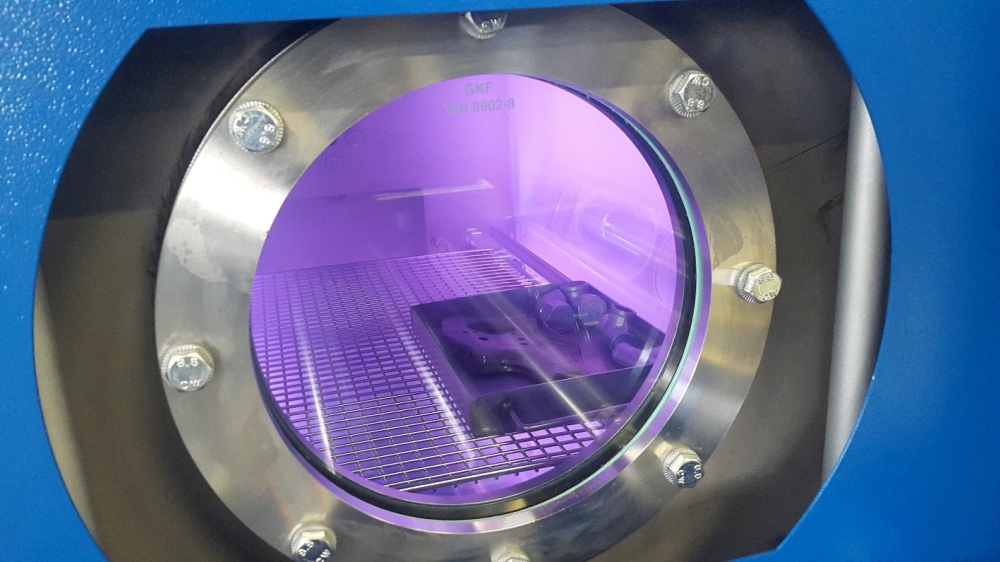
PPC process for additively manufactured parts
Standard in systems for precision and ultra-fine cleaning are multi-frequency ultrasonic systems that allow flexible adaptation of the frequency and intensity of the ultrasound to the requirements of different workpieces. In addition, the PPC process is used for complex components, capillary structures or porous surfaces, for example of components manufactured in sintered metal and additive manufacturing technologies. Equipment features such as a multi-sided overflow in all cleaning and rinsing baths as well as immersion spray rinses specially developed for ultra-fine cleaning help to meet very high cleanliness specifications in a process-safe manner.
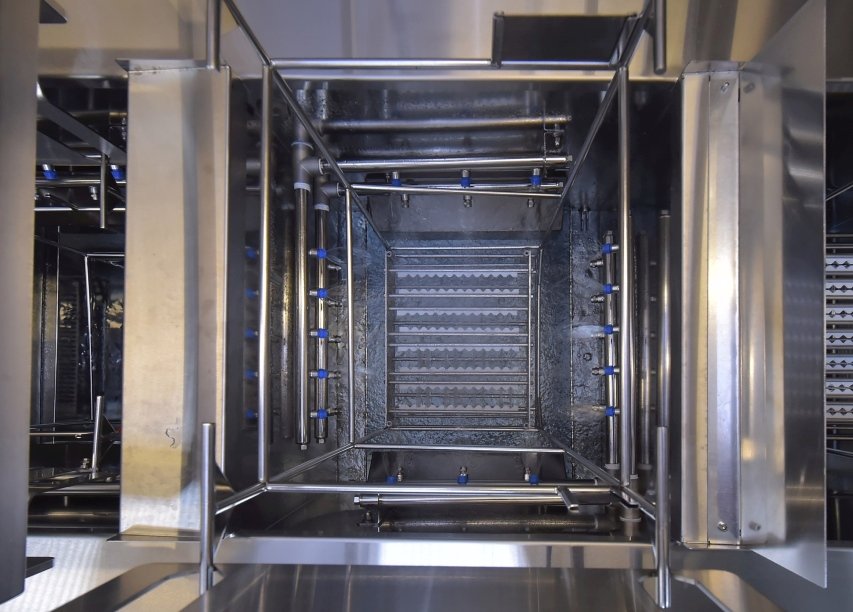
Adjusting temperature, power and frequency
The determination of which cleaning and rinsing baths are used with which workpieces as well as the component-specific process parameters such as temperatures, power and frequency of the ultrasound, PPC intensity as well as the dwell time in the various cleaning and rinsing baths is carried out during process development.
Drying is usually implemented as infrared and/or vacuum drying, depending on the part complexity and heat absorption capacity. The resulting part-specific cleaning programs are stored in the system control. The software implementation of the cleaning sequence also plays a decisive role. Among other things, it ensures that the specified dwell times in the cleaning and rinsing tanks are precisely adhered to and that prioritized processes can be carried out, for example for very sensitive components.
Which system and process solution is best from the point of view of cleanliness and economy can be determined by cleaning trials in the precision technology centers of Ecoclean and UCM with original components.
Ecoclean GmbH
www.ecoclean-group.net