

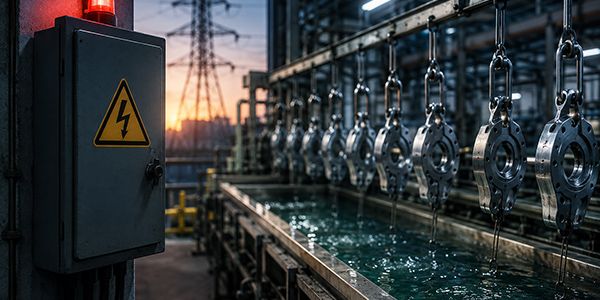
The Electricity Security Platform (SiPlaS), established by the Federal Network Agency and grid operators, is intended to enable mandatory load reductions by industrial consumers in the event of an electricity shortage. The Central Association for Surface Technology (ZVO) supports measures to prepare for supply crises but opposes permanent government control of industrial production as a result of structural electricity shortages.
For companies in the electroplating and surface technology sectors, mandated load reductions can have far-reaching consequences. The association cites production losses and scrap, as well as potential disruptions to critical industrial supply chains. Electricity-intensive production processes, in particular, are therefore the focus of the statement.
ZVO Advocates for Voluntary Load Flexibility
The ZVO distinguishes between voluntary, compensated flexibility on the part of industrial electricity consumers and mandatory interventions to manage structural electricity shortages. Voluntary load shifts should remain possible. However, the association rejects government-mandated production controls intended to compensate for a permanent lack of electricity capacity.
At the same time, the ZVO classifies security of supply as a core government responsibility. Sufficient, secure, reliable, and competitive energy must be available for industrial production. The position paper sets out corresponding guidelines for the design of the Electricity Security Platform and requirements for energy policy.